



Walk with whomever you like, whenever you like, out in nature, without a heavy pack on your back and with a comfortable welcome each evening: that is the promise of a walking holiday with luggage transfer. You follow the trail with a small daypack while your luggage travels by road to your next accommodation. The idea does raise some practical questions, though: who carries the bag, how much can it weigh, what should you keep with you, what does the option cost, and where does it not work?
Grand Angle has been organising self-guided walking holidays since 1983, in France and across the rest of Europe. Here we answer these questions using the information on our trip pages, then present the three ways to walk light (single-centre, multi-centre or point-to-point) with itineraries in France for each.
| How it works | You walk with a daypack; your luggage travels by vehicle to your next accommodation |
|---|---|
| Luggage allowance | One bag per person, 10 to 15 kg depending on the trip (most often 15 kg) |
| Cost | Included in some trips, optional on others: €80 to €205 per person in the examples below |
| Three formats | Single-centre, multi-centre or point-to-point |
| Check before you go | The time to drop off your bag, departure days, stages in mountain huts, and the journeys on the first and last days |
Walking with luggage transfer: what you need to know
- How your luggage reaches the next stop
- How much luggage transfer costs
- The limits of luggage transfer
- What to keep in your daypack
- Single-centre, multi-centre or point-to-point
- Where to walk with luggage transfer in France
- Frequently asked questions
How your luggage reaches the next stop
In the morning, before you set off walking, you leave your bag at the place and time given in your travel pack, usually at your accommodation’s reception. A local carrier loads it and drops it at your next accommodation, where it is waiting for you when you arrive. Meanwhile, you carry only a small daypack with your water, picnic lunch and what you need for the day.
The same rules come up on one trip page after another:
- One bag per person. On our self-guided walking holidays in France, the maximum weight ranges from 10 to 15 kg: 10 kg in the Vanoise or between Conques and Cahors, 13 kg on Belle-Île or the Pink Granite Coast, and 15 kg on most other routes. On some trips, the carrier charges a supplement above this limit.
- A soft bag rather than a large suitcase. A holdall or a backpack in good condition is easy to load; a suitcase is still possible if it is not too bulky.
- A deadline to meet. A bag dropped off after the set time may not leave with the others, so pack it the night before.
How much does luggage transfer cost?
On some of our trips, such as Belle-Île, the Pink Granite Coast or Corsica, luggage transfer is included in the price. On others, it is offered as an option, and you can also choose to carry all your belongings yourself. Here are three examples taken from our trip pages in October 2026, per person:
| Trip | Without luggage transfer | With luggage transfer | Difference |
|---|---|---|---|
| Puy de Dôme to Sancy, 6 days, 2 people (2027 season) | €790 | €995 | €205 |
| Puy de Dôme to Sancy, 6 days, 3 to 6 people (2027 season) | €790 | €870 | €80 |
| Vanoise and Haute Maurienne, 6 days (2026 season) | €640 | €815 | €175 |
| Conques to Cahors, 9 days, in walkers' hostels | €690 | €810 | €120 |
| Conques to Cahors, 9 days, in hotels or guesthouses | €910 | €1,040 | €130 |
The Sancy example shows that the option costs less per person when more of you travel together, because the cost of the vehicle is shared between travellers. Prices change from one season to the next: the page of each trip is the reference.
The limits of luggage transfer
Your luggage follows the road, not the trail. Four situations therefore need a little attention:
- Accommodation with no road access. A mountain hut that can only be reached on foot cannot receive luggage. On some mountain routes, the trip page flags a “stage without luggage transfer”: you walk up carrying what you need for the night.
- The first and last days. Luggage transfer runs between the accommodation along the route. In Corsica, on the trail from Corte to the Gulf of Porto, you carry your own bag between your accommodation and the bus stop at the beginning and end of the trip.
- Departure days. Luggage transfer relies on an organised service: in the Vanoise, the option is only available for departures on a Sunday or a Tuesday.
- The day’s stage. Your luggage waits for you at the accommodation booked for that night, so you need to reach it by evening. Choose your level carefully; stages often offer several options, shorter or more challenging.
What should you keep in your daypack?
Even with luggage transfer, you still walk with a backpack: 20 to 30 litres is usually enough. Keep in it:
- water, at least 1.5 litres, more in summer or on a route with no water points;
- your picnic lunch and a few snacks;
- a waterproof jacket and a warm layer, even in summer in the mountains;
- a hat, sunglasses and sun cream;
- a small first-aid kit, with something to treat a blister;
- your travel pack, the map and a charged phone, with the Grand Angle mobile app, which shows your position on the route;
- your ID, a means of payment and useful phone numbers.
Everything else (spare clothes, wash bag, evening shoes) travels in your luggage. For a detailed list and advice on choosing the right capacity, see our article on what to pack in your hiking backpack.
The light walker’s luxury: a field guide
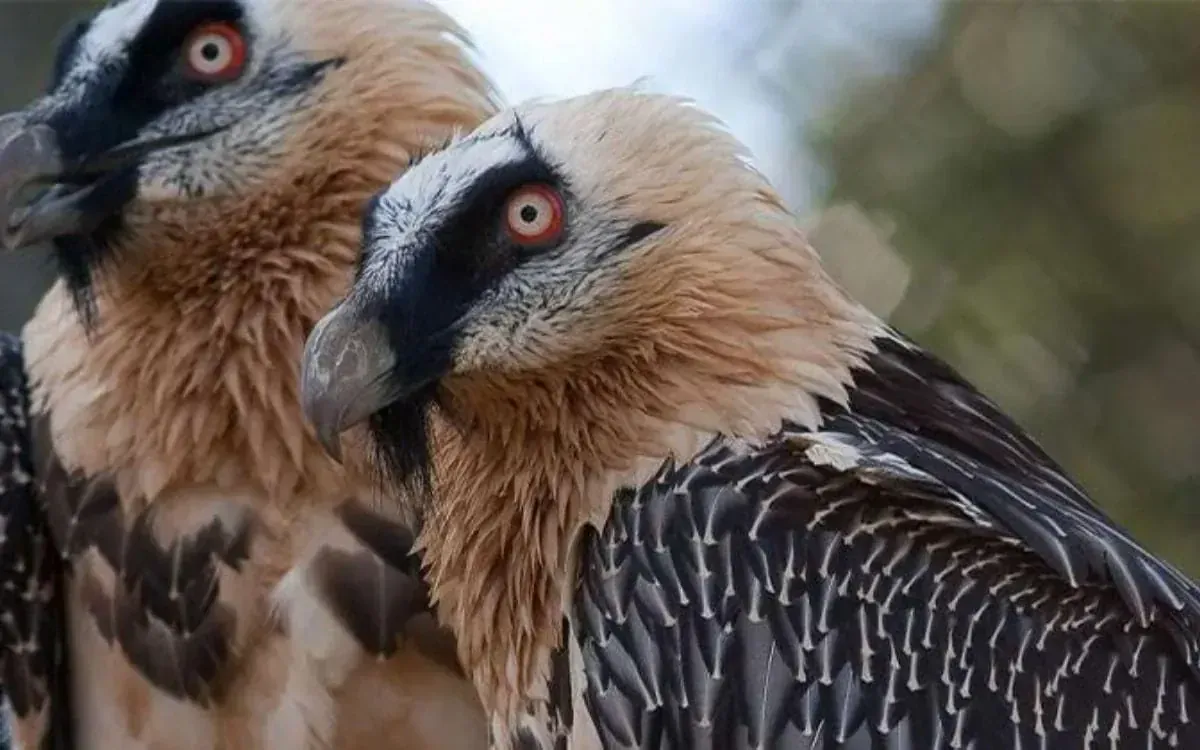
Printed guides are a little heavy, but the information they hold is dense and comprehensive. With luggage transfer, they travel in your bag: you can pore over them in the evening at your accommodation, then slip one into your daypack on the day you hope to meet some of the “locals” who welcome us.
In the mountains, take a guide to identifying birds of prey in flight, to recognise eagles, buzzards, harriers or kites. On the coast, a guide to seashore birds will help you tell the common gull from the great black-backed gull and the lesser black-backed gull.
Single-centre, multi-centre or point-to-point: three ways to walk without carrying your luggage
Luggage transfer does not play the same part in each format. On a single-centre holiday there is none; on a multi-centre holiday it happens once or twice; on a point-to-point holiday, every morning. To find out which pace suits you, our six-question quiz weighs up your taste for independence and your wish to keep moving.
Single-centre: your luggage stays put
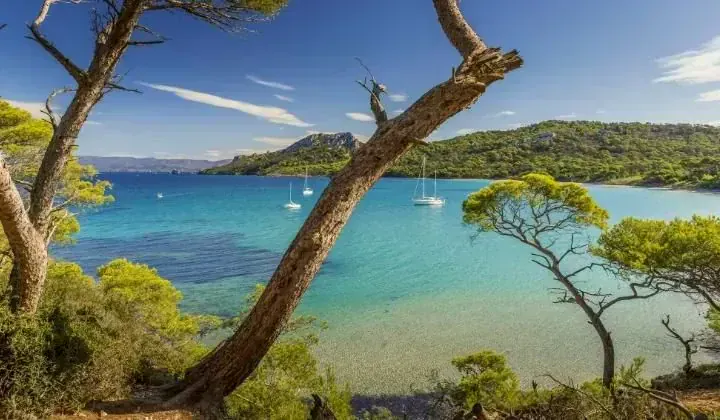
You unpack for the whole stay and make yourself at home: you settle into a little routine, choose your walk each day and can even treat yourself to a lazy day. Luggage is no longer a question. On the other hand, the area you can explore is more limited, and you often need a journey by car, bus or boat to reach the start of the walks.
For example: the Îles d’Or, between Port-Cros, Porquerolles and the Giens Peninsula, a 4-day trip at level 2. You stay on the Giens Peninsula or at the port of Hyères, and the boat takes you walking on Port-Cros, then on Porquerolles. Browse our other single-centre walking holidays.
Multi-centre: two or three bases
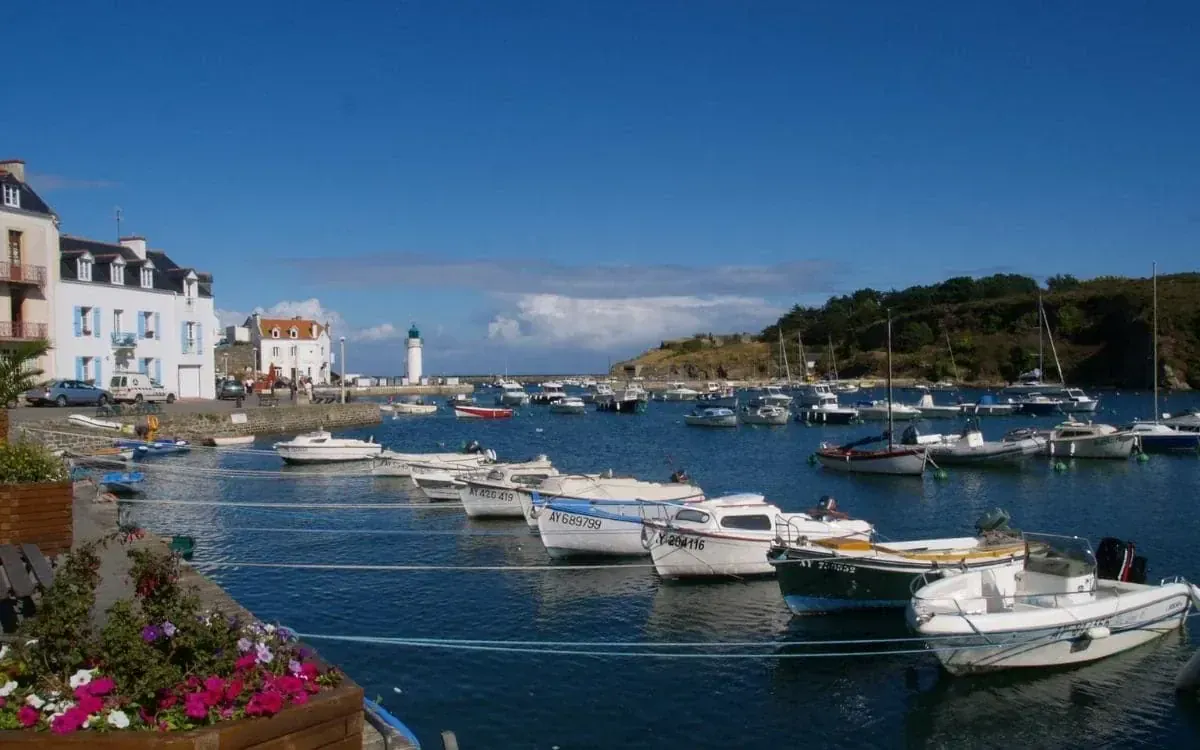
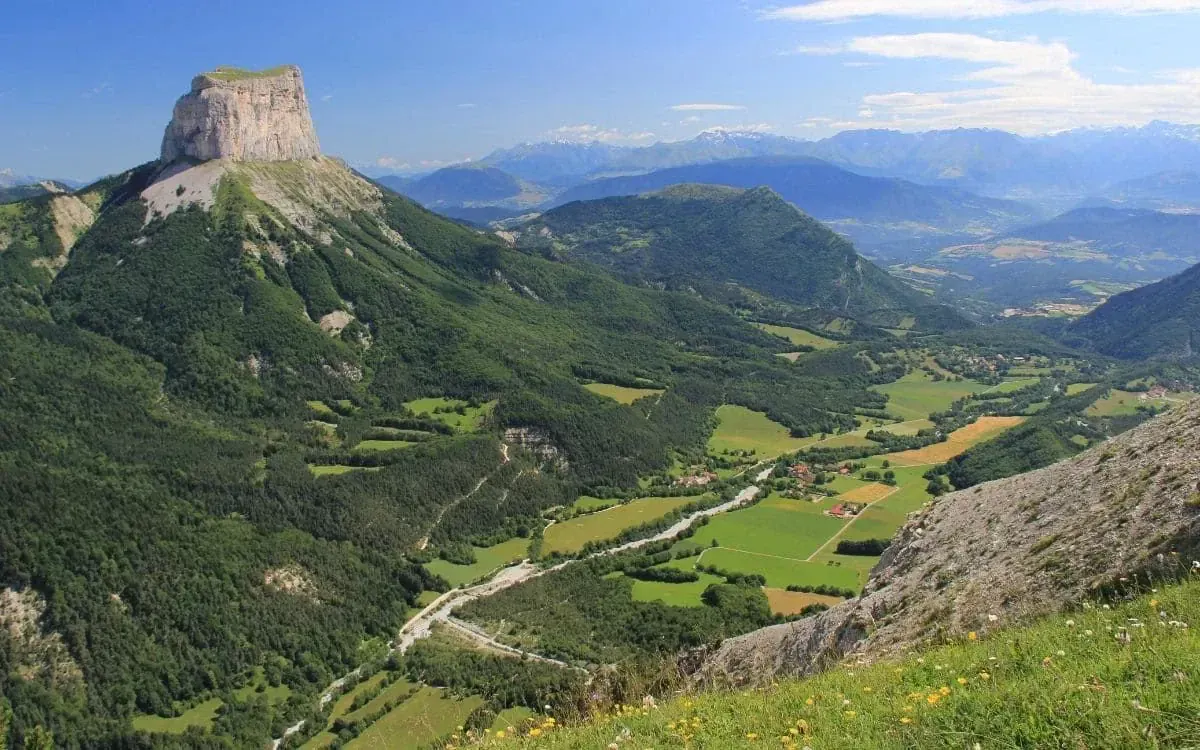
You change base every two or three days: call it a compromise, and not an unpleasant one. Your luggage only travels once or twice, and you see more landscapes than on a single-centre holiday.
- On Belle-Île-en-Mer, you spend 3 nights in Le Palais, then 3 nights in Sauzon, in 2-star hotels. Your luggage, limited to 13 kg, changes hotel only once.
- In the Trièves, at the foot of Mont Aiguille, 7 days at level 3 link the beautiful villages of the Trièves, the summits of the Vercors and the wide expanses of the High Plateaux Nature Reserve: a feast for the eyes!
Point-to-point: new accommodation every night
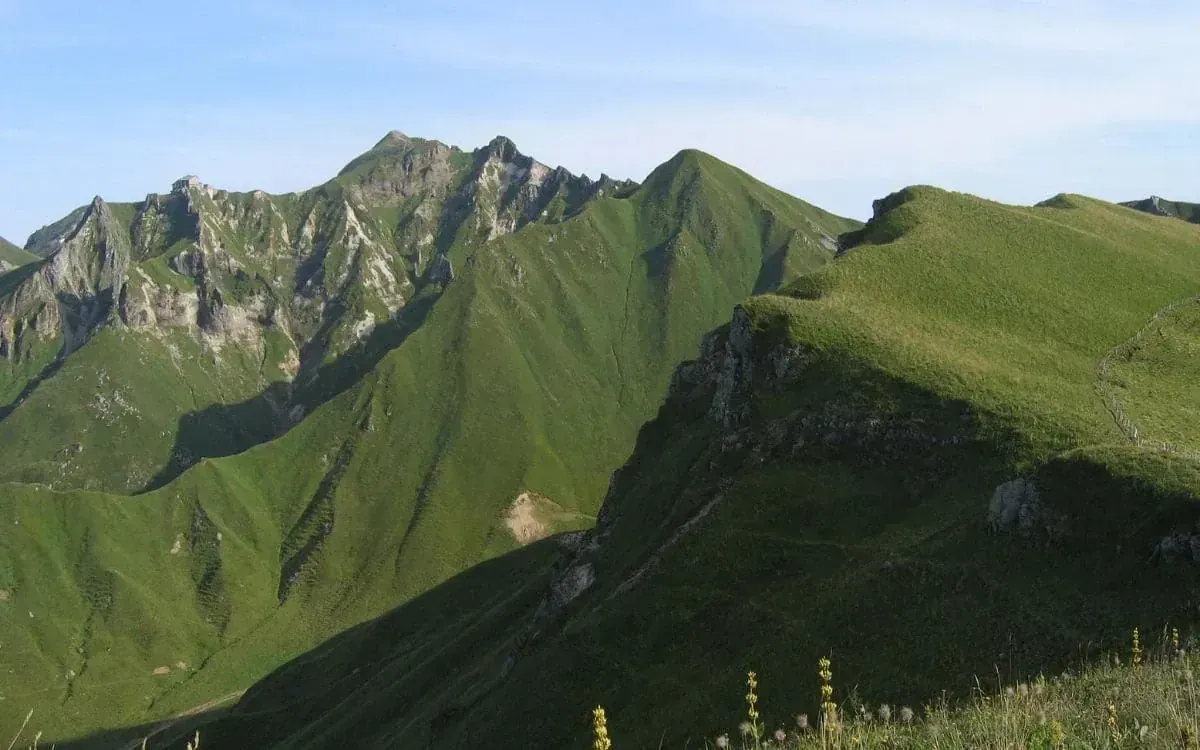
Wide-open spaces await, with the surprise of new landscapes and new evening hosts every day. A point-to-point holiday is where walking without a heavy bag changes the journey most: you string together five or six days of walking without carrying your belongings. In return, you need to complete each day’s stage, which means choosing your level carefully.
For a first point-to-point holiday, the crossing of the Auvergne volcanoes, from the Puy de Dôme to the Sancy Massif, strings together 6 days at level 2, with one soft-sided bag of up to 13 kg transferred for you. Luggage transfer is optional on this trip.
Where can you walk with luggage transfer in France?
Do you prefer the sea or the mountains? Active either way! Here are four settings where luggage transfer works well, with an itinerary for each. The map shows every trip in this article; each marker links to its section.
The walking holidays with luggage transfer in this article
On the coast: the Pink Granite Coast
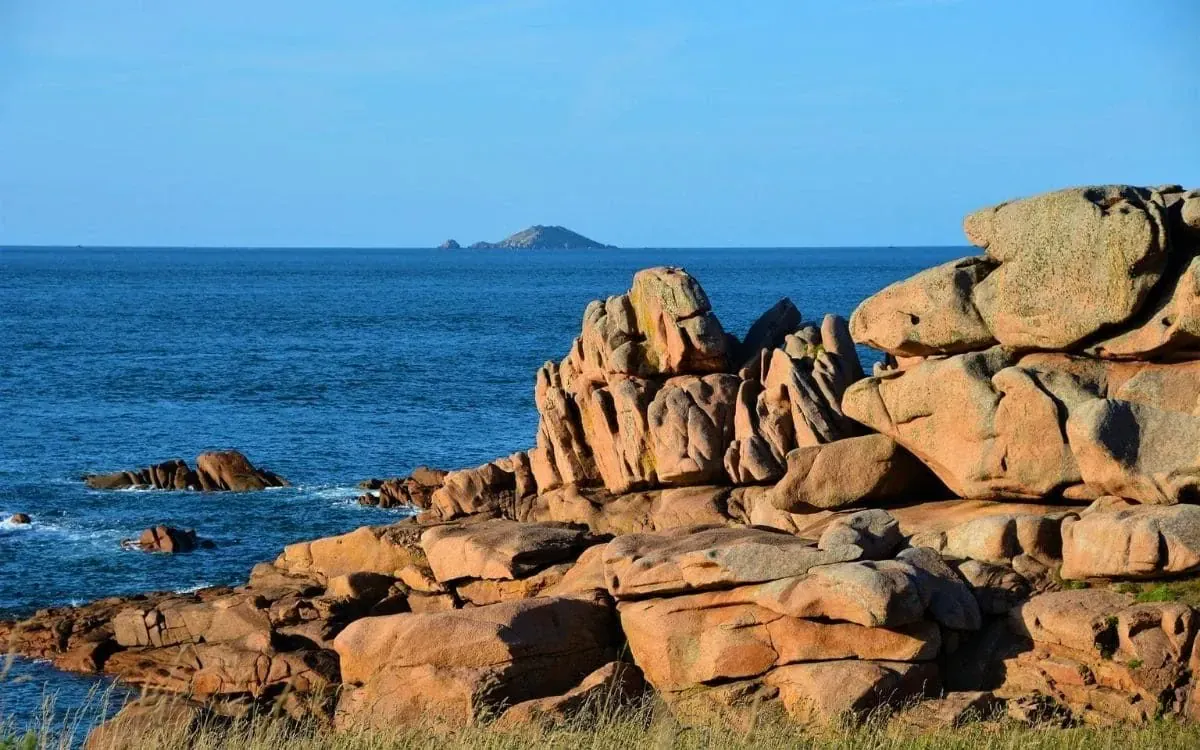
Coastal paths leave time for a quick swim and some seabird watching. At the height of summer, choose Brittany, with its rocks and harbours: the Pink Granite Coast takes 7 days from Lannion, via Perros-Guirec and Ploumanac’h. It is a level 1 trip, the most accessible on our scale, and your luggage is waiting for you at each evening’s stop.
In the mountains: the Vanoise and Haute Maurienne
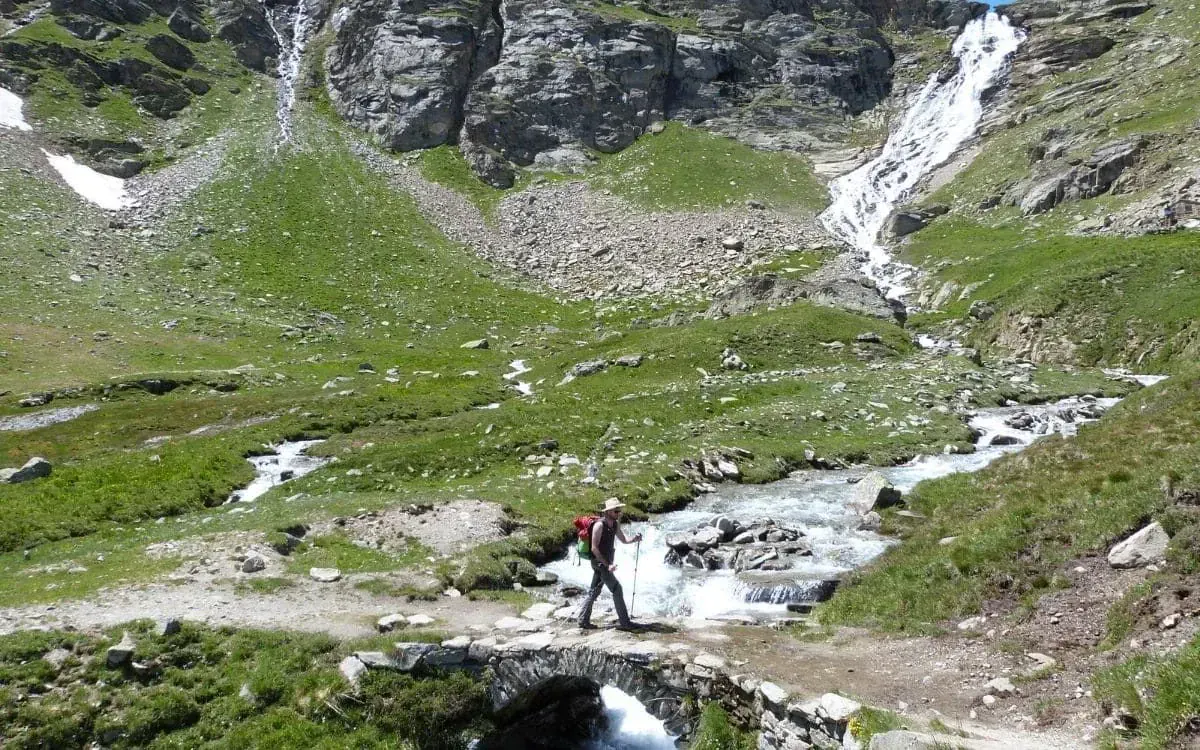
Longing for ibex, marmots, glaciers, mountain flowers and traditional villages? The Vanoise, between valleys and glaciers takes 6 days at level 3 from Termignon, via the Col de la Vanoise and Pralognan, staying in mountain huts and a hotel. Your luggage follows you, provided you travel light: 10 kg maximum.
Nature and heritage: from Conques to Cahors
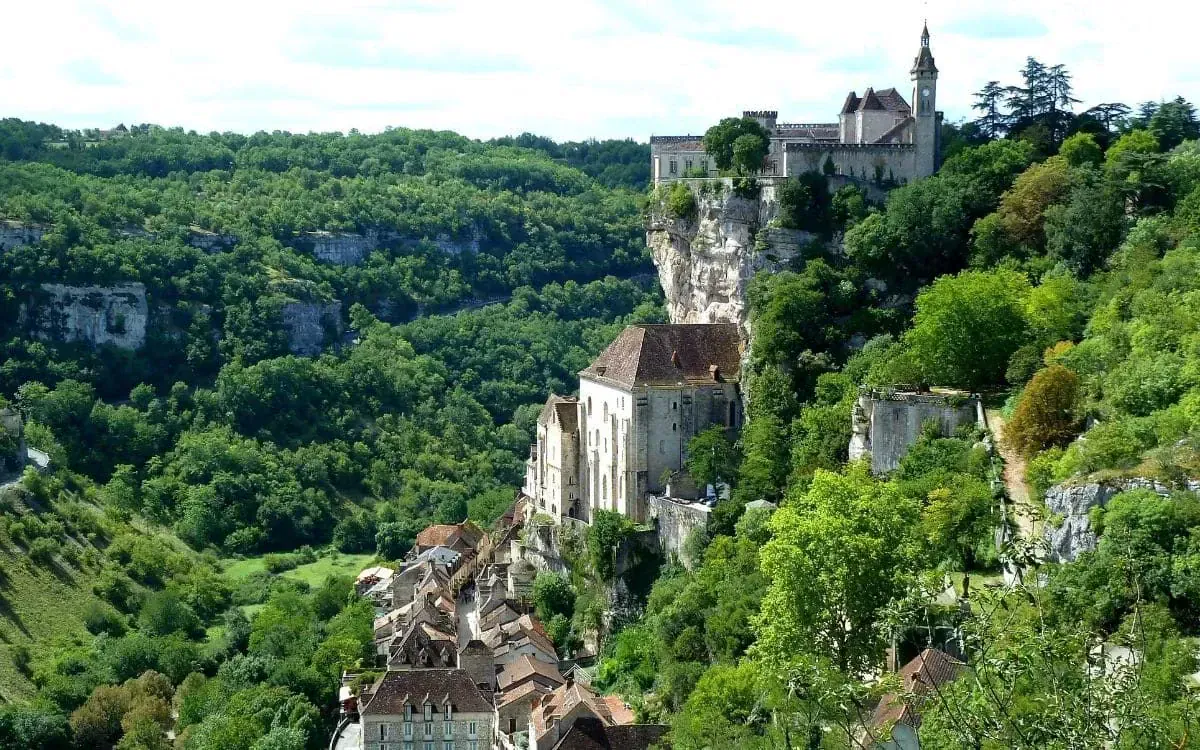
France has an exceptional natural heritage; it is also an “old country”, where people and nature have known each other for thousands of years. Wherever a GR long-distance footpath runs, people have passed before, building a Romanesque chapel here and dolmens there. Discovering history along the trails is a light and enjoyable way to learn.
On the Way of St James, from Conques to Cahors via Rocamadour, 9 days at level 2, you choose between walkers' hostels and hotels or guesthouses, with or without luggage transfer.
With the family: Corsica between sea and mountains
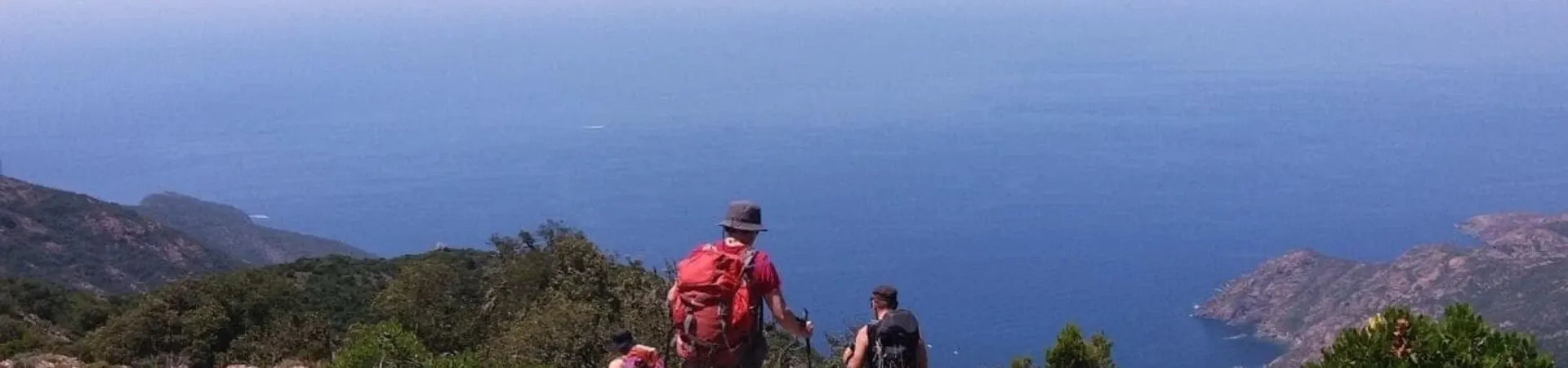
For the summer holidays, you may want to keep your children and teenagers close at hand. To burn off and channel their energy, nothing beats a few good days of walking. From the age of 10, children can join our level 2 walks; teenagers quickly move up to level 3 or 4, and the physical limit will be yours! It all depends on their motivation and growth, though. With luggage transfer, nobody drags a heavy bag along, and everyone keeps some energy for an evening swim.
Our suggestion: Corsica, from Corte to the Gulf of Porto, 6 days at level 2 combining island, sea and mountains, from April to October. For more ideas, browse our family walking holidays.
There are many ways to travel on foot with Grand Angle: the choice is yours. If you are unsure, our travel advisers know these trails and will help you make the right choice.
Frequently asked questions about walking with luggage transfer
Can I go without luggage transfer to pay less?
Yes, on trips where it is offered as an option, such as Puy de Dôme to Sancy, the Vanoise or the Way of St James between Conques and Cahors. You then carry all your belongings: bring a hiking backpack suited to several days and pack as light as you can. Where luggage transfer is included, as on Belle-Île or the Pink Granite Coast, it is part of the price.
Do I need to be very fit to walk with luggage transfer?
No, but you do need to reach the accommodation where your luggage is waiting each evening. Start with a level 1 or 2 trip, such as the Pink Granite Coast or the Auvergne volcanoes, or browse our selection of easy treks for beginners in France.
What happens if I cannot finish the day’s stage?
Your travel pack gives the contact details of our local partners and of Grand Angle’s assistance service, available 24 hours a day. Depending on where you are, a taxi can take you closer to your accommodation; on some trips, the trip page specifies that this is at your own expense. Your luggage, for its part, is delivered to the planned stop.
A question about this article?
Write to us: our team will reply by email.
Article written by
Solène Roux
Editorial lead
Passionate about travel and a keen advocate of slow travel, I am fortunate to turn my love of adventure into engaging stories. As editorial lead at GrandAngle.Travel, an agency specialising in trekking and cycling…


