
Make your own way to the charming imperial spa town of Bad Ischl. You can arrive by train or car.
At the hotel, you will find all the information you need for the week.
AccommodationOvernight in Bad Ischl
Choose which cookies you accept. Privacy policy
Audience measurement
Google Analytics and Matomo cookies — journeys, searches and bookings.
Targeted advertising
Google Ads, Meta and Effinity — conversions, personalised ads and campaign attribution.
Travel assistant
AI-generated answers. Check important information on our information pages, in your contract or with a human advisor at GrandAngle.Travel.
AI answers — when in doubt, ask an advisor.




Grand Angle, the specialist agency for trekking in Austria, invites you to discover the most beautiful lakes of the Salzkammergut on this 8-day self-guided walking holiday.
Not far from Salzburg, the Salzkammergut is dotted with some 76 crystal-clear lakes, nestled amid lush greenery in the heart of the mountains. Its mountains and lakes, with their wonderfully pure water, beautiful villages and rich cultural heritage make it a region that is both magnificent and fascinating, earning it UNESCO recognition.
In summer, swimming is often possible in the lakes. You can shorten each day’s walk.

Make your own way to the charming imperial spa town of Bad Ischl. You can arrive by train or car.
At the hotel, you will find all the information you need for the week.
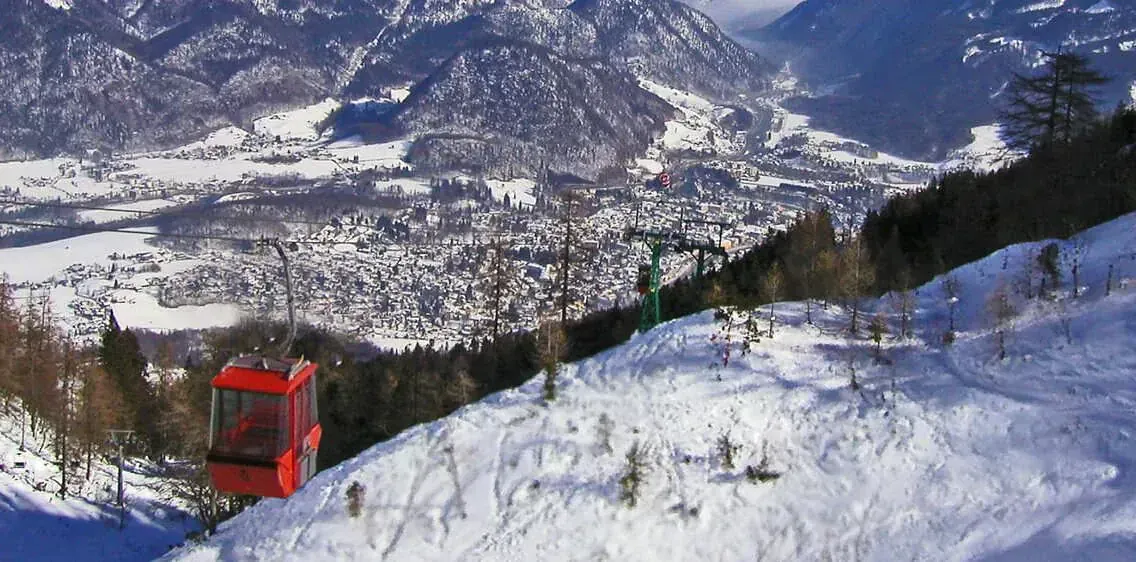
Take the bus from Bad Ischl to Russbach (pay locally). Then walk towards Lake Schwarzensee (715m; in summer, once the sun has warmed the water, swimming here is a real delight!). Enjoy a peaceful walk across the alpine pastures of Mossalm, then descend through the narrow Burgau gorge to Weissenbach or Steinbach on the shores of Lake Attersee.
14km, 5–5½ hours of walking, +400m, -430 m
You can extend the walk by around 10km by setting off on foot from Bad Ischl: follow the Elisabeth trail to Russbach. An additional 2 to 3 hours of walking, +180m, -180m.
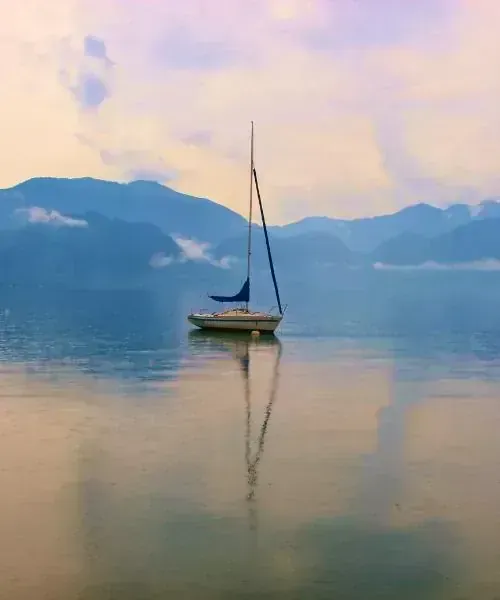
A spectacular stepped trail leads you up to the peaceful Eisenau plateau, with the summit of Schaffberg (1782m) as a backdrop. You are between Lakes Attersee and Mondsee. The trail continues to Scharfling and descends towards Lakes Krotensee and Wolfgangsee, where you can swim. Once you reach the beautiful village of St Gilgen, take the bus to Abersee (pay locally).
15km, 5½ to 6 hours of walking, +700m, -620m.
You can extend the walk by around 8km by walking from St Gilgen to Abersee, adding 1½–2 hours of walking, +50m, -30m.
Optional: you can climb Schaffberg on foot and descend to St Wolfgang either on foot or by cog railway: 6½ hours of walking, +1300m, -1250m for the return walk, or 4–4½ hours of walking, +1300m, if you descend by train.
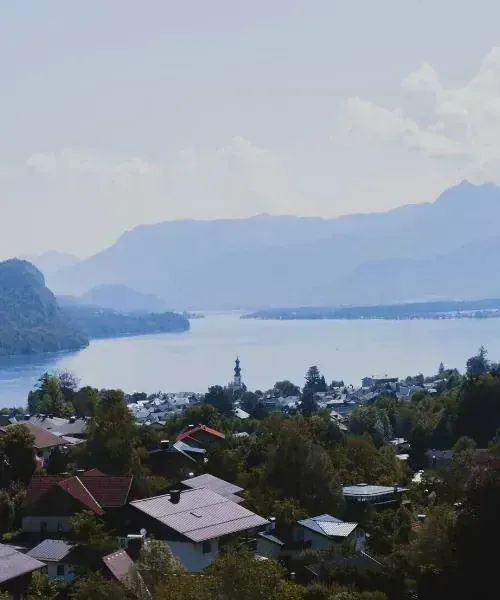
Today, you savour the unspoilt surroundings of Lake Wolfgangsee and its neighbouring peaks. Several walks are available, depending on your preferences and fitness level:
You can cross the lake by boat from Abersee to St Wolfgang and then take the cog railway up Schafberg for a superb panoramic view of the Salzkammergut mountains in every direction. You then descend to St Wolfgang.
7.5km, 2h–3h walking, +164m, -141m.
You can also opt for a rest day: explore St Wolfgang and make your way leisurely to Strobl along the lakeshore.
6km, 2h–2h30 walking, +110m, -110m.
Alternatively, you can head up to the alpine pastures of Postalm: Austria’s largest pasture and Europe’s second-largest high plateau, offering expansive views across wide-open landscapes. Along the way, you will find numerous inns serving traditional dishes and local produce. This route requires a taxi transfer. You can also choose to climb Bleckwand, 1541m.
17km, 7h–8h walking, +1080m, -1075m.
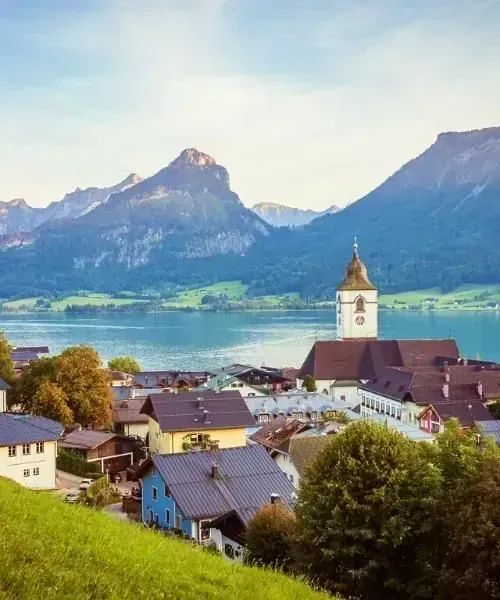
From Strobl, you soon rejoin the “Bear Trail”, the Bärenpfad. This historic trail takes you up to Bärenpfadkogel, at 1333m, with magnificent panoramic views from the ridge. Descend the other side into an unspoilt valley towards Bad Goisern, near Lake Hallstättersee, following the Weissenbach mountain stream through the Chorinskyklause gorge.
21km, 8h walking, +895m, -977m.
You can shorten the route by taking a taxi to Maustelle: this reduces the distance by 6km, the walking time by 1h45 and the ascent by 150m.
For an easier day, you can also take the bus from Strobl to Bad Ischl, then walk to Bad Goisern along the Soleleitungsweg beside the River Traun: 10km, 3–4h walking, +100m, -70m.
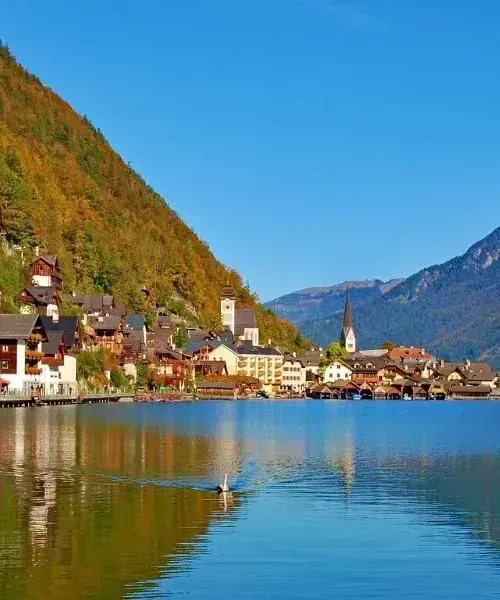
From Bad Goisern, head towards Lake Hallstatt and follow its eastern shore, enjoying superb views of the remarkable village of Hallstatt. We recommend taking the boat across to visit Hallstatt and the salt mines before continuing to Bad Aussee by train through the romantic Koppental valley (approximately 3,5€, payable locally).
19km, 5h walking, +127m, -102m.
You can extend this route by walking all the way to Bad Aussee: +13km, +4h walking, +300m, -150m.
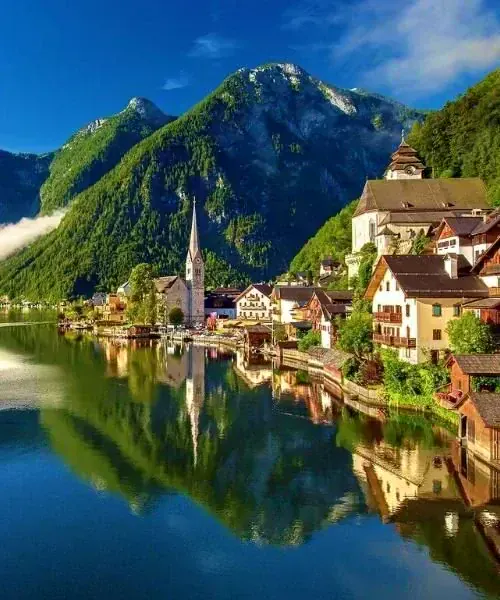
From Bad Aussee to Bad Goisern, you pass through the alpine garden (well worth a visit!), past Aussee’s historic salt mountain, and across a beautiful region of alpine pastures. Return to Bad Ischl by bus or train (at your own expense, payable locally).
17km, 5-6h walking, +414m, -277m.
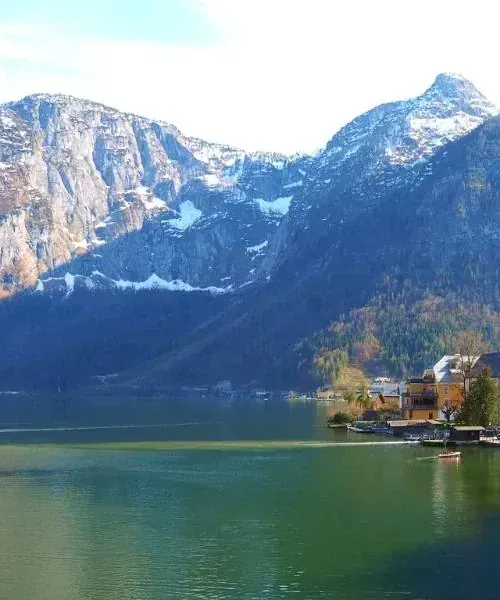
Your trip ends after breakfast, or you can extend your stay.
Itinerary
We may need to change the itinerary shown, either for logistical reasons (accommodation overbooking, splitting groups, changes in terrain conditions, rockfalls, damaged trails, etc.) or at the guide’s discretion (weather, the group’s ability, etc.). These changes are always made in your best interests, for your safety and greater comfort!
Daily departures from 18 April to 31 October 2027. The departure date determines the season.
| From | To | 2 to 3 people | 4 to 5 people | 6 people or more |
|---|---|---|---|---|
| 18/04 | 30/06 | 1040 € | 1030 € | 1020 € |
| 01/07 | 01/09 | 1100 € | 1090 € | 1080 € |
| 02/09 | 31/10 | 1040 € | 1030 € | 1020 € |
Kristiina Gaillard
Travel Advisor
Thomas Praire
Technical Travel Manager
Clémence Rouchez
Travel Advisor
Moderate to challenging: 4 to 10 hours of walking and 300 to 800m of ascent per day, on trails with few technical difficulties. Hiking experience is recommended but not essential. On almost every stage, you can shorten the day’s walk by taking buses or boats (not included in the price). This allows you to adjust the difficulty of the stage. Suitable for motivated children aged 10 and over.
You only need to carry a small daypack with your belongings for the day and your picnic lunch. The rest of your luggage will be waiting for you at the next overnight stop. We recommend packing a change of clothes in the daypack you carry with you, as rare, unforeseen circumstances, such as traffic jams, can sometimes delay luggage delivery. If it rains, you will then be able to change when you arrive.
Bookings are possible for 1 person or more.
8 days / 7 nights
Support
We arrange hotel bookings and luggage transfers. We provide a complete information pack with vouchers, maps and detailed route descriptions.
Your practical travel pack (vouchers, tickets, etc.) will be waiting for you at your first hotel.
Comfortable 3*** hotels and Gasthof inns, or equivalent, except in Bad Ischl, where you will stay in a 4**** hotel.
Some hotels have no official rating or choose not to be rated, including establishments that still held a rating a few years ago. This does not mean their quality has declined—far from it. If, for example, we describe the comfort level as “3* or equivalent”, this means that the establishment may not have an official rating, but offers comfort comparable to a 3* hotel.
Our German neighbours generally do not use double beds with a single large mattress, and rooms with 2 twin beds are rare. Usually, there is one bed base with two 90 cm mattresses, and each person has their own duvet. If you would like a twin room, please let us know when booking. We will do our best, subject to availability. Rooms for 3: these usually have an extra bed in the form of a fold-out sofa bed; however, the rooms are generally spacious (ideal for adults with 1 child. For 3 adults, we recommend 1 double room & 1 single room).
Breakfast at your accommodation.
Half board (dinners) is available as an optional extra.
Lunches are at your own expense. Along the way, you will often find small inns. Depending on your accommodation, you may also be able to order a packed lunch the evening before for the following day, payable directly to the hotel. Please note! Our Austrian neighbours often have dinner early. Please respect meal service times.
On request, we can also welcome your dog. The supplement varies by hotel and is payable locally.
In the afternoon in Bad Ischl, where you spend your 1st night.
In Bad Ischl on the morning of day 8, after breakfast.
Start on a date of your choice, from late April to mid-October.
Scheduled or low-cost flights from Paris and Lyon to Salzburg, usually with a stopover in Frankfurt or Vienna.
Train to Bad Ischl (usually via Zurich and Salzburg; approximately 11–12 hours by train).
Departures from Paris Gare de l’Est or Gare de Lyon, depending on the train.
Visit the Austrian Railways website: www.oebb.at;
From Paris: approximately 10 hours' drive
From Lyon: approximately 10 hours' drive
You can leave your car in a public car park. Parking charges are payable locally.
Most car parks in Bad Ischl allow only short stays. Long-stay parking is available at “Im Gries”, on Kurhausstrasse, at Rechensteg and at Kaiservilla (12€ per day); for stays of several days, we recommend the Maria Theresien Weg Reiterndorf car park: 25€ for the whole stay (2024 rate).
You can also park at the Salinenplatz car park, approximately 300m from the station; the daily rate is 6€.
(October 2026 prices – information to be checked).
A number of our trips offer opportunities to swim, either along the day’s route or at the end of the day. It would be a shame to miss out. However, we emphasise that you alone must decide whether it is appropriate to swim; swimming is therefore your own responsibility and entirely at your own risk.
Since 2012, Grand Angle has been a member of ATR, the leading association for more responsible tourism. We design our trips – on foot, by bike and on snow – to invite everyone to discover the world differently: with curiosity, respect and kindness.
With a seat on the board of directors since 2018, we actively help the sector adopt more meaningful practices. In practical terms, we focus on:
We also share the values of the traveller’s ethical charter, which encourages everyone to take simple steps to protect the places they visit and make meaningful connections with the people they meet.
Since 2025, Grand Angle has been recognised as a Travelife Partner, an international certification that recognises our responsible practices in environmental protection, ethics and sustainable management, both within our company and in our work with partners and the organisation of our trips.
This label, the second level of a rigorous international certification scheme, recognises our concrete actions to support responsible tourism. We are actively working towards the next level, Travelife Certified, in line with our sustainability policy
In this section, you will find links to products from our partner Alpinstore, a French online retailer specialising in outdoor equipment, based in Annecy.
For carrying your belongings
Read our magazine article on how to pack your hiking backpack.
For hiking
For maximum comfort, choose a layered clothing system: warm base layers (leggings + top) such as “Carline” or “Capilene” (hollow fibres that wick away perspiration) + a sweatshirt or fleece jacket + a mountain jacket and overtrousers with a waterproof, breathable membrane (such as Gore-Tex or equivalent) for bad weather. As a general rule, except in hot climates and countries, avoid cotton, which traps moisture close to the body (and dries slowly), and opt for suitable synthetic fabrics instead.
Please note: synthetic technical clothing performs very well. New merino wool clothing is also available; it performs very well, is comfortable to wear and has the added advantage of resisting perspiration odours!
For your picnic lunch
For protection from sun and rain
After your hike
Find these tips in our article “what to take on a hike”.
This list is intended as a guide and should be adapted to your trip and the season in which you travel.
Austria
Capital: Vienna
Dachstein / Salzkammergut
The alpine landscape of Hallstatt-Dachstein, part of the Salzkammergut and therefore the Eastern Alps, is characterised by dramatic scenery, with towering mountains rising steeply from narrow valleys. Since medieval times, its prosperity has depended on salt mining centred on the town of Hallstatt, whose name means “salt settlement”, a reminder of its original purpose.
Systematic salt production began in the region as early as the Middle Bronze Age (late 2nd millennium BC). Natural brine was collected in containers and evaporated […] Salt mining continued until Roman times and then resumed in the 14th century. The large quantities of timber needed to support the mine tunnels and evaporate the brine came from the extensive forests of the mountain ranges, which had been directly controlled and managed by the Austrian crown since the 16th century. The town of Hallstatt was rebuilt in the late Baroque style after a fire in 1750 destroyed its wooden buildings.
Nature
The beauty of the alpine landscape—with its high-altitude pastures used for summer grazing by sheep and cattle since prehistoric times as part of seasonal livestock migration, which still gives valley communities the right to access specific upland grazing areas—was “discovered” in the early 19th century by writers such as the novelist Adalbert Stifter, the poet and playwright Franz Grillparzer, and most of the renowned painters of the Biedermeier school. As tourist numbers grew, hotels and saltwater spas were developed to welcome visitors.
Authenticity
As a result of its distinctive historical development, this cultural landscape has retained a degree of natural and social authenticity exceptional in the Alpine region. Its spatial layout and physical fabric, shaped by the interaction between people and the environment, have been preserved to an exceptional degree. These qualities and their context were further enriched by the many artists who stayed in the region; their numerous paintings and depictions provide further evidence of its value.
(source: UNESCO, available at https://whc.unesco.org/fr/list/806, accessed on 10.01.2018)
A valid national identity card or passport.
Bring your European Health Insurance Card, which you should request from your health insurance provider at least 15 days before departure. Health conditions are similar to those in France.
Austrian National Tourist Office
58, rue de Monceau – 75068 PARIS or PO Box 475 – 75366 PARIS Cédex 08
Tel. 0153839520 – fax 0145619767
Email: oewparworldnet.fr
Website: http://austria-tourism.at
Swimming in Austria
Website: www.upperaustria.com
The euro
Dialling code for calling France from abroad: 0033
Dialling code for calling Austria: 0043
4,3 · 7 reviews
Fernand 7/29/26
— Thank you for giving us the opportunity to enjoy such a wonderful stay!
Regregveq 7/29/26
— We received a very warm welcome, but we were overlooked at every stage of the registration process. That said, we had a wonderful vacation—thank you!
—
— Reply from the team
Thomas 7/29/26
— We had a wonderful vacation and can't wait to return to Austria (there was one small hiccup—one of our travel documents was incorrect—but the tourist office helped us find a place to stay, so it wasn't a problem).
Jean Paul 7/29/26
— Overall, a simple and pleasant experience, with elegant cars and good restaurants. However, the hikes were sometimes too long (22 km in a single day!!)
—
— Reply from the team
Would you like to make this a private trip?
Travel with friends or family on dates that suit you. Tell our specialists what you have in mind.

From €1,690
4,7 · 25 reviews

From €1,160
3 · 2 reviews

From €1,550
5 · 1 review

From €1,020
4,1 · 8 reviews

From €1,140
4,4 · 22 reviews

Currently unavailable
4 · 1 review

191 trips

191 trips

103 trips

103 trips

9 trips

345 trips

229 trips
170 trips
169 trips

94 trips
66 trips

44 trips

43 trips

33 trips

14 trips

2 trips
Call us