
Explore this beautiful city with its exceptional architectural and cultural heritage. The city enjoys a prime location at the confluence of the Moselle and the Seille: its many islands and islets give it a uniquely green and charming character.
A landmark and Gothic jewel, the cathedral stands in the city’s historic heart. A major cultural attraction in Metz, the Cour d’Or museums bring together military and archaeological collections that reflect the city’s illustrious past.
With hundreds of hectares of green spaces and landscaped promenades along the Moselle, Metz is a true garden city by the water. As night falls, the city lights up: more than 13.000 lights illuminate its main historic monuments, creating a magical spectacle for anyone out for a stroll.




At Grand Angle, drawing on our expertise in riverside cycle paths across Europe, we offer a cycling holiday that takes you from France to Germany.
Starting in Metz, a city with a remarkable architectural heritage, you will follow the meandering Moselle to its confluence with the Rhine in Koblenz. This accessible route follows a dedicated cycle route winding between vineyard-covered hillsides renowned for their wines, particularly Riesling.
This journey offers a true immersion in European history. You will discover the meeting point of three countries at Schengen, explore the Roman remains in Trier, one of Germany’s oldest cities, and admire the many medieval castles overlooking the valley. The route is dotted with picturesque wine-growing villages with half-timbered houses, such as Bernkastel-Kues and Cochem, making for charming stops along the way.
This holiday is offered on a self-guided basis, allowing you to travel at your own pace. For a glimpse of the experience, take a look at Bernard’s account of cycling the Moselle’s cycle paths.
Itinerary
Program
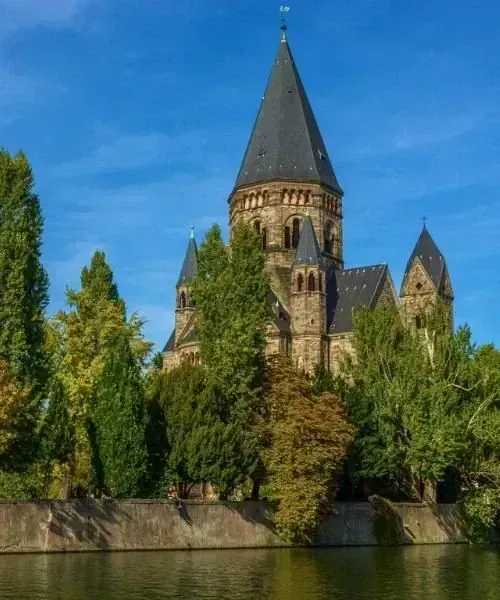
Collect your bikes at the hotel if you have hired them. You begin the tour on the new “Charles le Téméraire” cycle route between Metz and Thionville. There, you rejoin the Moselle cycle path along the river. At Schengen, you reach the “Dreiländereck”, the meeting point of 3 countries, France, Germany and Luxembourg: the river leaves France and forms the border between Germany and Luxembourg for 27km. Your overnight stop is Perl, a charming European town. (You can choose to shorten the route by taking the train from Metz to Thionville).
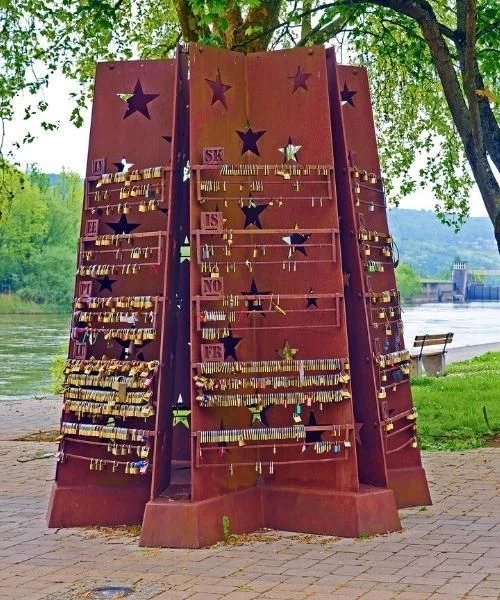
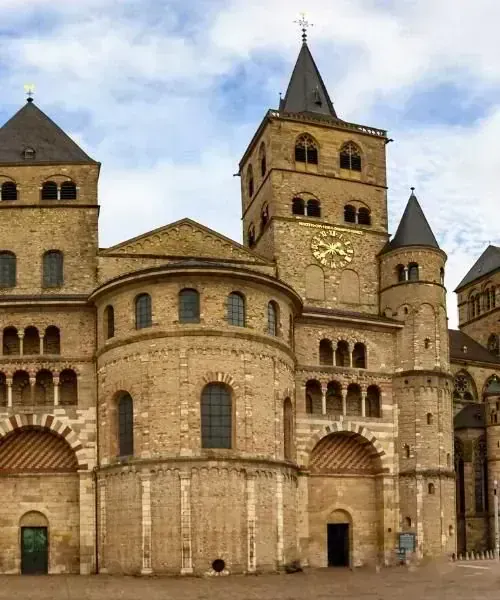
You cycle through vast vineyards. You pass Thorn Castle, which also has the oldest castle vineyard on the Moselle, established in Roman times. Next comes Wormeldingen (Luxembourg’s most renowned Riesling), Grevenmacher (butterfly garden, wine cellar visits), then Oberbillig (fishing museum) and Konz (where the Saar and Moselle meet; imperial villa). You arrive in Trier, founded in 16 BC, one of Germany’s oldest cities. You can visit the Porta Nigra (the largest Roman building in Germany), the basilica, the amphitheatre or the Roman baths.
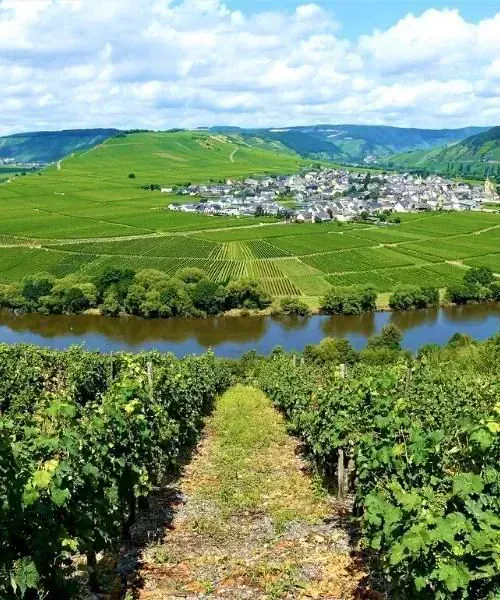
You continue to follow the course of the Moselle. You pass Schweich and its old lighthouse, which once again evokes Roman history, with its wealth of remains from this period: Villa Rustika, water conduits, a Roman wine press, etc. After rounding the Trittenheim meander, you arrive in Trittenheim, then pass through Neumagen-Dhron, Germany’s oldest wine-growing village! Be sure to stop here for a wine tasting. You then have just a few more kilometres to cycle before reaching Piesport, your destination for today.
Following the Moselle’s many meanders and cycling through countless vineyards, you arrive in the old town of Bernkastel, first settled in Neolithic times, with its half-timbered houses and Moselle wine museum. Then comes Traben-Trarbach with its Art Nouveau houses; Marienburg Castle stands on the crest of the vineyard-covered hill…
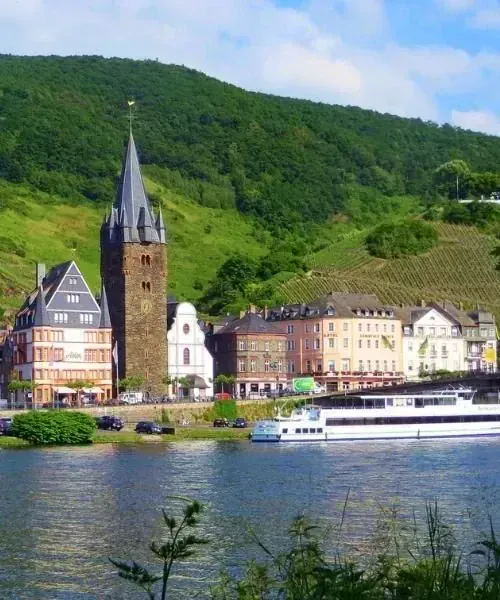
Stop in the beautiful, historic wine-growing village of Zell, on one of the river’s loveliest meanders.
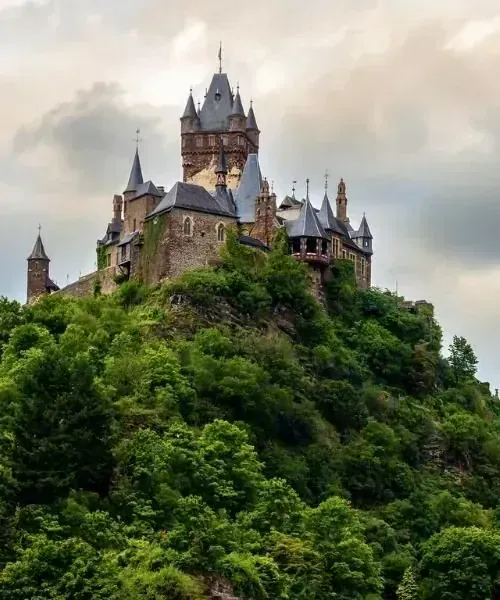
Your route takes you towards Bullay (a Roman settlement) and Bremm, surrounded by Europe’s steepest vineyards, with a slope of 65°! You then continue towards Beilstein, where you will see the ruins of Metternich Castle overlooking the Moselle in a magnificent setting. You arrive in the medieval town of Cochem, the most important town on the Moselle, which has plenty to see: a beautiful fortified castle overlooking the town, half-timbered houses…
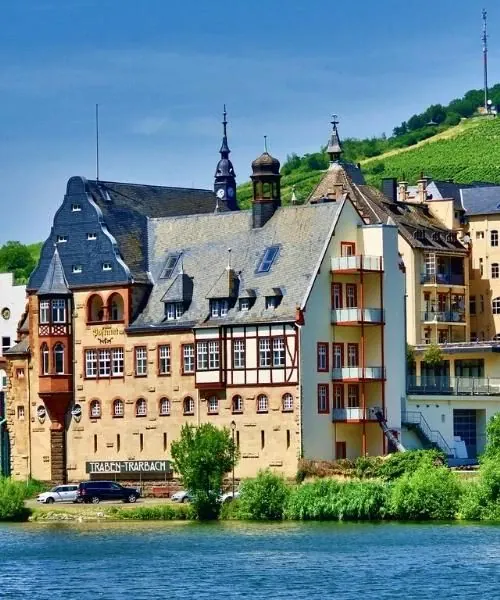
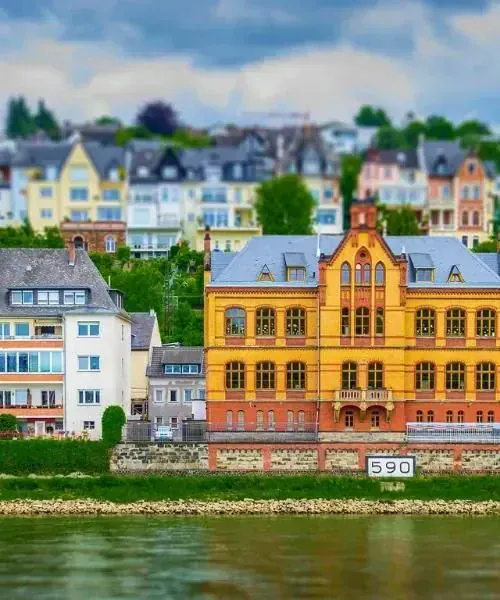
Following the left bank, you pass the remains of Klotten Castle, then Treis-Karden (monastery and museum) before reaching Moselkern; visit beautiful Eltz Castle. You pass Bischofstein Castle, Hatzenport and Thurant Castle before reaching the wine-growing villages of Kobern-Gondorf and Güls. The final 6km follow the Moselle to the “Deutsches Eck” in central Koblenz, at the confluence of the Moselle and Rhine. Take the time to explore this superb city.
Your stay ends after breakfast.
We can book a return transfer to Metz for you every Saturday at 9:00 am. Alternatively, you can take the train from Koblenz to Metz. Returning by train with your own bikes is not very practical, so we recommend the return transfer by minibus.
We may sometimes need to change the itinerary shown, either for logistical reasons (accommodation capacity issues, changes in ground conditions, landslides, damaged trails, etc.) or due to weather conditions. These changes are always made in your best interests, for your safety and greater comfort!
Dates, prices and booking
Details
Departures are possible every day, from 10 April to 16 October 2027.
| Period | 2–3 travellers | 4–5 travellers | 6 travellers or more |
|---|---|---|---|
| Apr 10 – Apr 16, 2027 | €1,120 | €1,110 | €1,100 |
| Apr 17 – Apr 30, 2027 | €1,290 | €1,280 | €1,270 |
| May 1 – May 28, 2027 | €1,340 | €1,330 | €1,320 |
| May 29 – Jul 2, 2027 | €1,290 | €1,280 | €1,270 |
| Jul 3 – Sep 10, 2027 | €1,340 | €1,330 | €1,320 |
| Sep 11 – Oct 3, 2027 | €1,290 | €1,280 | €1,270 |
| Oct 4 – Oct 16, 2027 | €1,120 | €1,110 | €1,100 |
Group discounts: -10 € per person for 4 to 5 people and -20 € per person for groups of 6 or more
- Accommodation in a room for 2 people, with breakfast included
- Luggage transfers from Metz to Koblenz
- Digital travel information pack
- The loan of one pannier per bike
- Drinks, lunches and dinners
- Bike hire
- Visits to attractions
- Parking in Metz
- Return travel to Metz
- Optional cancellation insurance and assistance cover
- Booking fees
- Tourist taxes (approximately 1,50 € to 3 € per person per day. Payable locally)
- Helmet
- Anything not mentioned under “Prices include”
Your travel advisors
Kristiina Gaillard
Travel Advisor
Clémence Rouchez
Travel Advisor
Technical and practical information
Level 2/5
Easy to moderate.
34 to 63km per day of cycling. No particular technical difficulties. Mostly on cycle paths, greenways or minor roads. Little elevation gain: a maximum of 100m per day.
Overall, the cycle paths along the Moselle are very well developed and of excellent quality. They are also very well signposted, and there are often paths on both sides of the Moselle.
A regional train runs between Cochem and Koblenz, stopping in the towns along the way. This allows you to shorten the final stage (if you are tired or the weather is bad, for example).
Between 01/05 and 31/10, a bus runs daily between Trier and Bullay (with space for a maximum of 22 bicycles).
From April to October, numerous boats operate on the river. You will see boarding points in almost every small town you pass through. Timetables are displayed on noticeboards at the boarding points. There are regular services between Trier and Treis Karen. More information is also available at https://www.moselrundfahrten.de/.
You only carry a small bag with your picnic lunch and the things you need for the day. Your luggage will be waiting for you at the hotel in the evening: it is transported by the hotelier or by taxi, with a limit of one bag per person. We recommend carrying a change of clothes in your panniers, as your luggage may occasionally arrive late due to rare, unforeseen circumstances, such as traffic jams.
Bookings are possible for as few as 1 person (a single room supplement is mandatory).
Departures are possible every day, from mid-April to mid-October.
8 days, 7 nights, 6 days of cycling.
This is a self-guided holiday. There is no guide accompanying you. A digital travel information pack will be sent to you by email. It includes access to our navigation app, GPX tracks, your hotel list, luggage labels, your route guide, vouchers and other information. You can receive a printed pack for an additional charge.
Rooms for 2 in comfortable 3* hotels, with a private bathroom.
Our German and Austrian neighbours generally do not use double beds with a single large mattress, and rooms with 2 twin beds are rare. There is usually a single bed base with two 90cm mattresses, each with its own duvet. Rooms for 3: these usually have an extra fold-out sofa bed; however, the rooms are generally spacious (ideal for adults with 1 child. For 3 adults, we recommend 1 double room & 1 single room).
More and more hotels are choosing not to have an official rating, including establishments that still had a rating a few years ago. This does not mean their quality has declined—far from it. If we indicate, for example, a comfort level of “3* or equivalent”, this means that the establishment does not necessarily have an official rating, but offers comfort comparable to a 3* hotel.
Breakfast is included. Lunch and dinner are not included. Half board is not available as an option on this tour, but you will easily find somewhere to eat locally, at your hotel (if it has a restaurant) or at nearby restaurants. You will also have no trouble finding places to eat along the way. Please note! Our German neighbours often eat dinner early. Be sure to check and respect meal service times.
On Day 1 in the afternoon in Metz.
On Day 8 in the early afternoon in Koblenz.
Bike hire
Your hire bikes will be delivered to your hotel on the day you arrive (or, at the latest, on the morning of your first day of cycling). Leave them at your final hotel at the end of the tour.
You can choose between women’s bikes (with a low step-through frame for easy mounting and dismounting – for riders from 1m50 tall) or men’s bikes (for riders from 1m65 to 2m tall), equipped with either 7 gears (with a coaster brake) or 27 gears (without a coaster brake). We reserve bikes without coaster brakes as standard, as French riders are generally unfamiliar with braking by pedalling backwards.
Unisex electric bikes with 8 gears are also available on request. These are good-quality, sturdy bikes made by Velo de Ville.
Equipment: All bikes come equipped with:
- a waterproof 13L pannier
- a repair kit (tools and a spare inner tube),
- a lock
- high-quality tyres with excellent impact resistance, which should allow you to complete the tour without a puncture
- a comfortable gel saddle (the saddle can be adjusted to your height without tools)
- a full chain guard
For hygiene reasons, we do not provide helmets.
Optional extras: depending on the tour, a map holder and a GPS device (deposit required) may be available on request (please reserve these when booking).
Electric bikes are suitable for everyone; 8 gears, 250W, 36V,15A, you can cover around 100km per charge (5h). Feel free to recharge your bike during your lunch breaks. Do not wait until the battery is empty. They let everyone enjoy the pleasures of cycling: some can ride with less effort, others can conserve their energy on difficult climbs, while sporty riders can cover as many kilometres as possible.
Children’s bikes (24 inches, 24 gears), trailer and child seat (from 9 months. Two small children up to around 5 years old can sit comfortably)
Ideal for children who are too big for the trailer or child seat but still too small to pedal their own bike.
Lorraine Airport: a shuttle to Metz is available if booked at least 24 hours in advance. See the operator’s information.
Luxembourg Airport: shuttles to Metz approximately every 2/3 hours (8 departures per day). Fares from 5 to 14€ (October 2019). Operator: Flibco, contact: 0970441433.
Strasbourg Airport: train from the airport to Strasbourg, then on to Metz
Getting to Metz
From Paris (Gare de l’Est): direct TGV, approximately 1h30
From Lyon (Gare Part-Dieu): direct TGV, approximately 4h45
See the websites: Oui.SNCF or www.db.de or www.dbfrance.fr
See the Via Michelin website
Public car parks in the city centre (approximately 10 to 16 € per day).
The Centre Pompidou car park is near our partner hotel in Metz. More information at: https://parclick.fr/parking-metz/gare_centre_pompidou. We will also provide information about parking options in your travel documents.
Return to Metz (on request)
Return transport for your own bikes
Transfer of your own bikes using our transport service.
It is possible to take the train with your own bikes, but this can be complicated: you will have a lot to load with both luggage and bikes, and several changes to make; we advise against it. You can visit https://int.bahn.de/fr, search for your train and tick “bicycle transport available” to see the available options.
You can bring your own bikes, but they remain entirely your responsibility. We accept no liability for damage, theft or other incidents involving your own bikes.
A number of our trips offer opportunities for swimming, either during a day’s route or at the end of the day. It would be a shame not to make the most of them! However, we stress that you alone must judge whether it is appropriate to swim; swimming is therefore your responsibility and at your own risk.
Member of Agir pour un Tourisme Responsable (ATR)
Since 2012, Grand Angle has been a member of ATR, the leading association for more responsible tourism. We design our trips – on foot, by bike and on snow – to invite everyone to discover the world differently: with curiosity, respect and kindness.
With a seat on the board of directors since 2018, we actively help the sector adopt more meaningful practices. In practical terms, we take care to:
- Transparency in our practices and prices
- Respect for our partners and local communities
- Protecting the environment on every trip
We also share the values of the Traveller’s Ethical Charter, which encourages everyone to take simple steps to protect the places they visit and foster meaningful encounters.
Travelife Partner
Since 2025, Grand Angle has been recognised as a Travelife Partner, an international label that certifies our responsible environmental, ethical and sustainable management practices, both within our company and in our work with partners and the organisation of our trips.
This label, the second level of a demanding international certification programme, recognises the concrete steps we have taken towards responsible tourism. We are actively working towards the next level, Travelife Certified, in line with our sustainable development policy
For cycling
- Cycling shorts or tights, depending on the season
- Cycling gloves
- A helmet (optional but strongly recommended)
- Sunglasses (to protect against the sun, wind and midges)
- A windproof jacket
- T-shirts or cycling jerseys
- A handlebar map holder and a smartphone mount to attach to the handlebars
- A water bottle
Note: synthetic technical clothing performs very well. New merino wool clothing is also available; it performs very well, is comfortable to wear and has the advantage of resisting sweat odours (brands include Icebreaker, Ruka, etc.)! As a general rule, avoid cotton, which makes you cold when wet.
For your lunchtime picnic
- A plastic bowl or plate
- Cutlery (spoon, fork, knife)
For protection against sun and rain
- Sunscreen and sunglasses
- A hat, cap or bucket hat (helmet)
- A windproof jacket
- A rain cape or a Gore-Tex jacket
After your ride
- A jumper or fleece
- Comfortable trousers for walking
- A pair of shorts
- A tracksuit or a change of clothes
- A lightweight, long-sleeved cotton shirt
- A pair of running-style trainers for the evening
- A toiletry bag
- A small first-aid kit: personal medication, Elastoplast, Biogaze or “2nd Skin”, gauze, antiseptic, arnica granules and aspirin for minor ailments… (quite a list! But rest assured, your first-aid kit often comes home untouched after your week of walking)
- If your bike has no pannier, bring a comfortable small 40-litre backpack with a waist belt to carry your personal belongings and picnic during the day. If you have a luggage rack, you can secure your bag to it with bungee cords. Hire bikes come with a pannier for your belongings. Bring a small backpack anyway; it makes it easy to carry your things when you stop to visit somewhere along the way.
- A bag for luggage transfers: a backpack, suitcase or travel bag in good condition.
Countries: France, Germany
Capitals: Paris and Berlin
Travellers, including minors, must carry a national identity card or passport (EU nationals).
Bring your European Health Insurance Card, which you should request from your health insurance provider at least 15 days before departure. Health conditions are similar to those in France. Remember to bring your Carte Vitale and enough of your usual medication for the duration of your stay.
Metz Tourist Office
2 place d’Armes
57000 METZ
Tel: 0387390000
Opening hours:
April–September and during the Christmas markets: Monday to Saturday, 9am to 7pm; Sundays and public holidays, 10am to 4pm.
October–March: Monday to Saturday, 10am to 6pm; Sundays and public holidays, 11am to 3pm.
German National Tourist Office
21 rue Leblanc, 75015 Paris
Tel: 0140201706, fax: 0140201700
www.germany-tourism.de
Country calling code for France when calling from abroad: +33
Country calling code for Germany: +49
Country calling code for Luxembourg: +352
There is no time difference: GMT +1.
The official language is German. Each region has its own dialect with its own distinctive features. In total, there are around 20 different dialects. Even some cities, such as Berlin and Cologne, have their own dialect. But do not worry: you will be able to make yourself understood by everyone. To help you find your way during your trip and talk to the Germans you meet, we have put together a few useful phrases for your trip to Germany:
Good day Guten Tag
Hello Hallo
Thank you Danke
Please Bitte
Yes Ja
No Nein
How are you? (formal / informal) Wie geht es Ihnen / dir? I am well Mir geht es gut.
Germany’s climate is generally said to be similar to that of France. It has a temperate climate, typical of Central Europe. However, the distances from east to west and north to south, together with the varied terrain, result in significant regional differences in climate. Western Germany is influenced by the Atlantic and has an oceanic climate. This means rainy winters. The oceanic influence decreases considerably in the east and south-east. The climate there is distinctly continental, with large temperature differences between hot summers and cold winters.
The best season for a holiday in Germany …
… is all year round. Germany has its charms in every season. In summer, you can enjoy warm, sunny weather, particularly on the Baltic coast, but also in the east and south-east, especially on the shores of Lake Constance or the banks of the Danube. If you are planning to explore the west or south, autumn is a good time to travel (although summer is also a lovely season). In the wine-growing regions, the autumn scenery and grape harvest season are particularly popular. If you want a snowy holiday with skiing or snowshoeing, the Black Forest, the Alps and the Bavarian Forest are particularly suitable. The ski season in Germany’s winter sports resorts runs from December to March.
Cuisine
Traditional, hearty home cooking is widespread in Germany. People here enjoy dishes that their grandparents used to make. There is a wealth of regional variety to discover. German recipes vary from north to south and from east to west. Almost every region has typically German recipes that help define its identity. In the Black Forest, try the “Schwarzwälder Kirschtorte” (commonly known in English as Black Forest gateau), a large cake made with cherries, sponge, chocolate and plenty of whipped cream. It is a truly indulgent, high-calorie treat, but you will love it! As you travel along the Rhine, treat yourself to a wine tasting, perhaps sampling a “Riesling” or a “Federweißer” (young wine that is still fermenting). The Palatinate region, near the Rhine, is famous for its wine production. It is Germany’s second-largest wine-growing region. Riesling is the predominant grape variety. To accompany these wines, Germans eat Zwiebelkuchen (onion tart). This is a traditional autumn dish, eaten mainly during and after the grape harvest. In Bavaria, try the typical “Weißwürste” (white sausages) with a pretzel and sweet mustard, accompanied, of course, by a “Maß of beer” (a full litre of beer!). Another typically Bavarian dish is “Leberkäs” (a type of meatloaf), usually served with potato salad and a fried egg. During your trip to the Baltic coast, you can try a “Fischbrötchen”. This is a fish sandwich made with locally caught fish. Particularly popular in Germany, Bismarck herring is marinated and flavoured with onions. In Saxony, you can try “Pfefferkuchen” (gingerbread). Traditionally eaten at Christmas, it can now be enjoyed all year round. In the Neckar region, in the Swabian Jura, Maultaschen (rectangular dumplings filled with meat or vegetables) are a delight.
Some famous festivals
Carnival
Carnival, also called “Fasching”, is a true fifth season for Germans. It begins on 11 November and ends sometime in March. Carnival in Germany is celebrated particularly enthusiastically in the Rhineland, in Mainz, Düsseldorf and Cologne. People dress in colourful, creative costumes and celebrate with music. The highlight of Carnival is the weekend before Ash Wednesday: from Thursday to Tuesday, street celebrations take place, with decorated floats parading through the streets, accompanied by music and dancing.
Oktoberfest
Oktoberfest, the beer festival, is Germany’s most famous festival and the largest funfair in the world. It has taken place every year for more than 200 years, from September to October, lasting 16 to 18 days in Munich. Germans also call it the “Wiesn”. During Oktoberfest, beer flows freely, but it is also an enormous funfair with numerous attractions. Many Germans follow the traditional dress code: men wear leather shorts and a shirt, while women wear a “dirndl” (a Bavarian outfit or dress).
History
The Berlin Wall
German history is marked by the division between East and West Germany. The wall was built in 1961 to stop the flow of refugees from the East. On 9 November 1989, Germany’s most hated structure fell. At that time, the GDR was on the verge of collapse, economically and politically bankrupt. The national border was opened and the unification of the two German states began. Even today, you can see some remnants of the wall, especially in Berlin.
Reviews
4 · 2 reviews
Beatrice 7/12/26
— A very nice route on the bike paths along the Moselle amid the vineyards; the most interesting part is on the first 4 days, lovely towns of Trier, Bernkastel, Traben and Cochem; the route of the last 2 days to reach Koblenz less fun, more monotonous with too many paths alongside busy main roads; we'd hoped to swim but conditions weren't great for it hotel comfort impeccable
—
— Reply from the team
Would you like to make this a private trip?
Travel with friends or family on dates that suit you. Tell our specialists what you have in mind.
We also recommend
- Our favourite
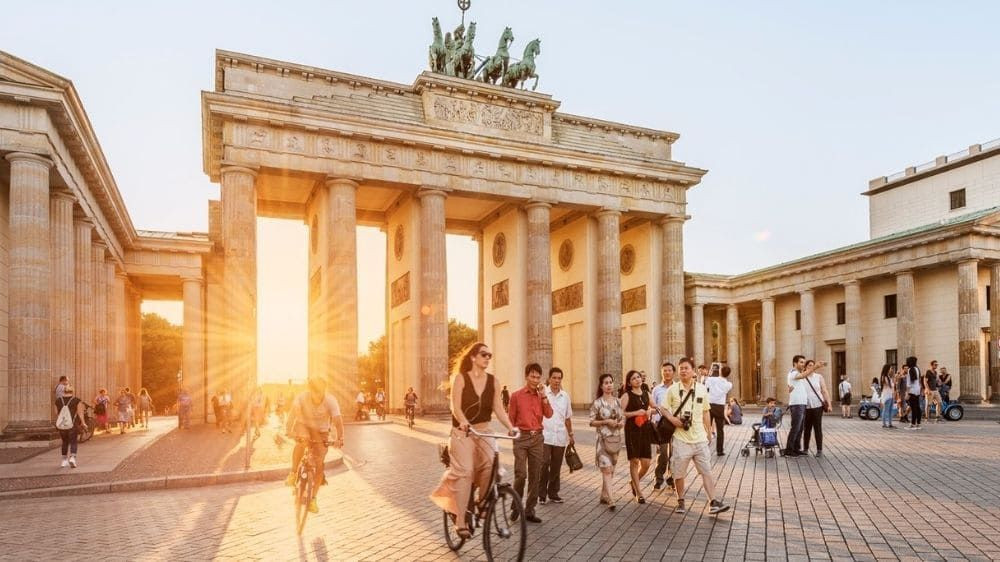
From Berlin to Copenhagen
Self-guided Cycling lodge to lodgeFrom €1,900
4,3 · 9 reviews
11 days●●ComfortNext departure from May 10, 2027 - Our favourite
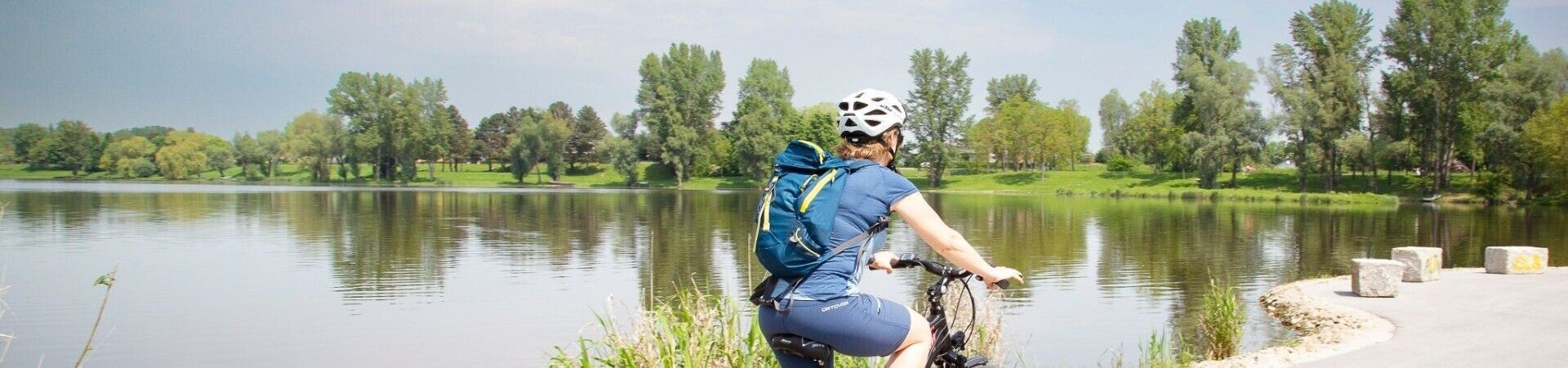
Danube River by Bike, from Passau to Vienna
Self-guided Cycling lodge to lodgeFrom €575
4,7 · 12 reviews
8 days●●SuperiorNext departure from Apr 30, 2027 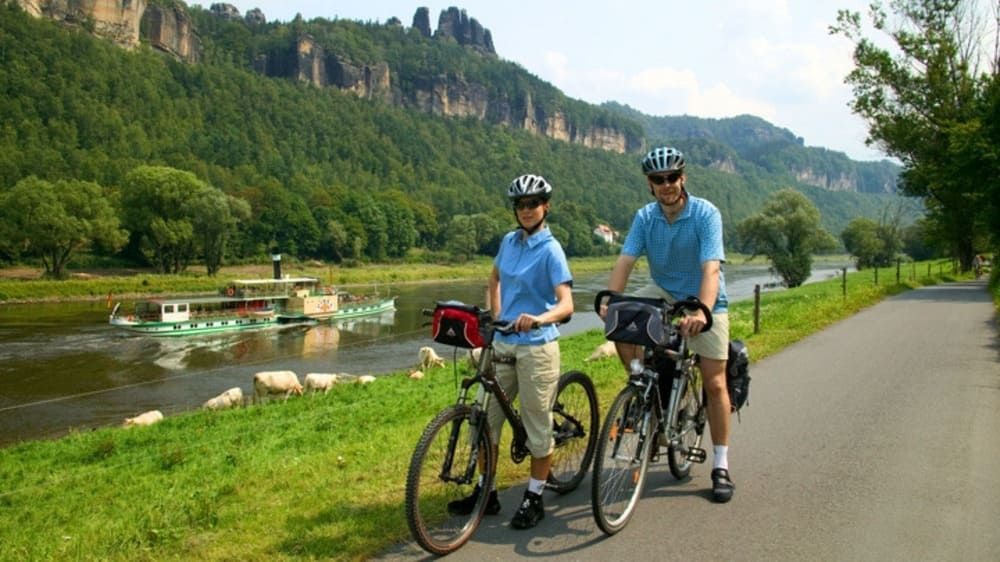
The Elbe from Prague to Dresden
Self-guided Cycling lodge to lodgeFrom €810
4 · 2 reviews
8 days●●ComfortNext departure from Apr 1, 2027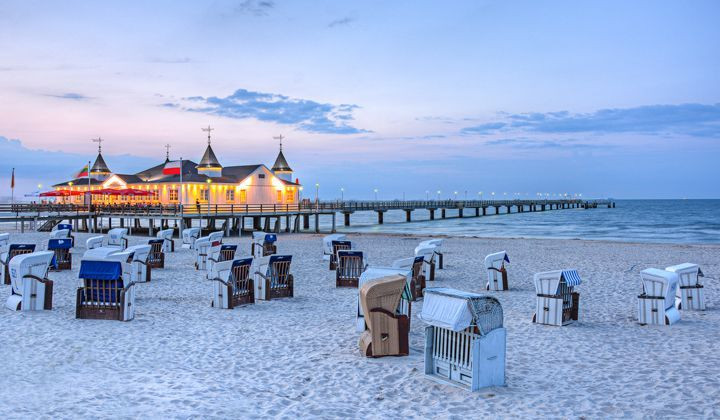
Germany’s Baltic Sea coast, from Lübeck to Usedom
Self-guided Cycling lodge to lodgeCurrently unavailable
14 days●●SuperiorNext departure from Apr 18, 2027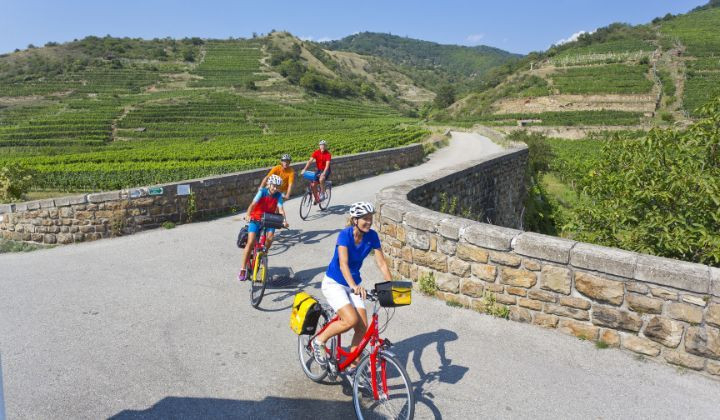
The Danube from Passau to Vienna, staying in charming hotels
Self-guided Cycling lodge to lodgeCurrently unavailable
5 · 1 review
8 days●●Excellence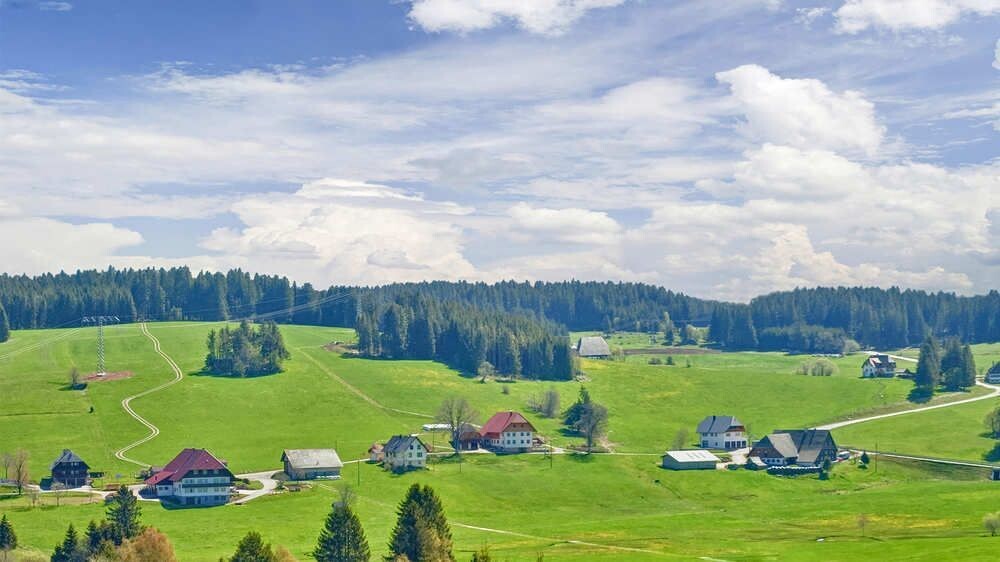
Black Forest Tour
Self-guided Cycling lodge to lodgeFrom €1,020
4 · 1 review
7 days●●ComfortNext departure from Apr 11, 2027


Continue exploring
 Autumn cycling
55 trips
 Trekking in Europe
143 trips
 Hiking in Europe
143 trips
- Autumn in Europe
136 trips
 Spring in Europe
135 trips
- Autumn hiking
80 trips
- Spring hiking
80 trips
 Cultural trips
38 trips
 32 European getaways for the whole family
27 trips
 Embark on an Epic Journey : Long-Distance Hiking Tours Across Europe
9 trips
 Family cycling tours in France
6 trips
 Loire by bike
5 trips
 Active Holidays in France
113 trips
 France
113 trips
 Micro-adventures in France
113 trips


