
Arrive in Le Puy-en-Velay and settle into your accommodation (bed and breakfast). Explore its old town, the Romanesque Notre-Dame du Puy Cathedral and its 12th-century cloister, as well as the Corneille rock, topped by a statue of the Virgin Mary standing 16m tall. Overnight in Le Puy-en-Velay.


The Camino de Santiago from Le Puy-en-Velay to Aumont-Aubrac
4 · 1 reviewNext departure from Apr 1, 2027


Walking the Via Podiensis means following one of the most iconic pilgrimage routes to Santiago de Compostela. Starting in Le Puy-en-Velay, this historic trail invites you to gradually switch off from everyday life, with each stage revealing the rich landscapes of the heart of France. This 7-day self-guided walking holiday gives you the opportunity to explore the first section of this legendary route, from the volcanic landscapes of Velay to the gateway to Aubrac.
Your adventure begins in Le Puy-en-Velay in Auvergne, an exceptional place whose Romanesque cathedral marks the symbolic starting point. Within the first few kilometres, the route leaves the Le Puy basin and takes you through the Velay mountains and the Devès volcanic range. You then cross the gorges carved by the Allier before reaching the Margeride plateaux, with their forests and heather moorland. This route, one of the great treks and walking holidays in the Massif Central, ends in Aumont-Aubrac, the gateway to the vast open landscapes of Aubrac.
To get a feel for this trail, read Adrien’s account of walking this same section with friends. If you feel inspired to carry on, you can continue along the next section, from Aumont-Aubrac to Conques, to discover the landscapes of Occitanie. Grand Angle offers numerous itineraries along the Camino de Santiago, in both France and Spain.
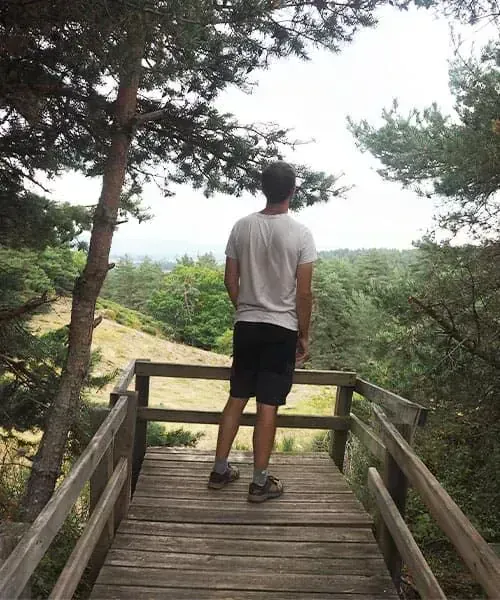
For a glimpse of what awaits you, here are a few images from this journey:
Itinerary
Elevation profile
Program
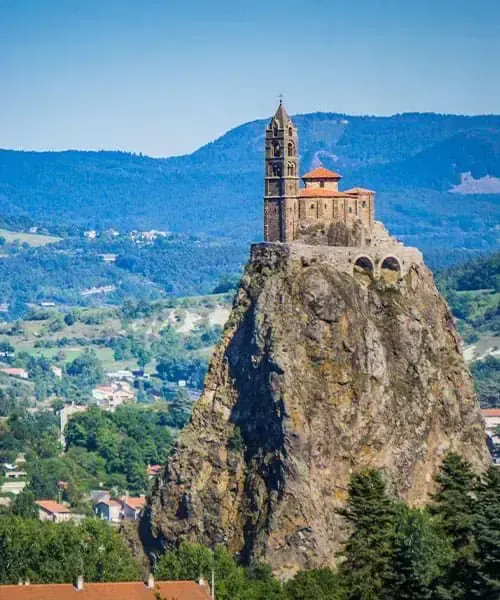
Le Puy Cathedral is the starting point for walkers setting out on the GR 65, the Camino de Santiago route from Le Puy-en-Velay to Aubrac. The trail climbs quickly out of the Le Puy basin. It crosses the Velay mountains, an area known for growing lentils, and heads into the heart of the Devès volcanic range. (Depending on accommodation availability, a short transfer to Saint-Didier-d’Allier may be arranged for the hotel / guesthouse option). Overnight in a dormitory at a walkers' hostel, with dinner and breakfast included.
Distance16 km
InfoWalking time: 4 h
D+Ascent: 450 m
D-Descent: 100 m
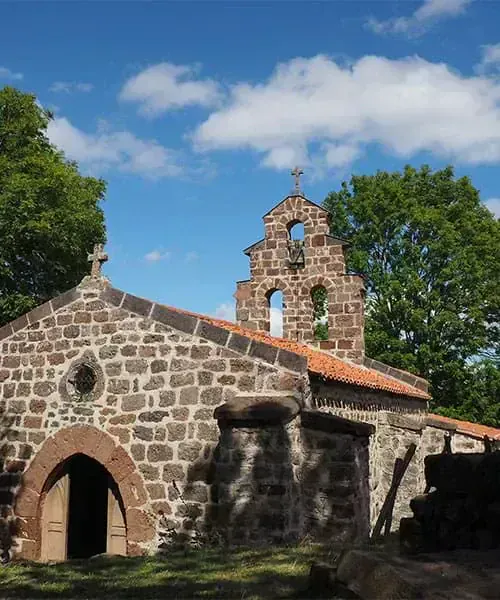
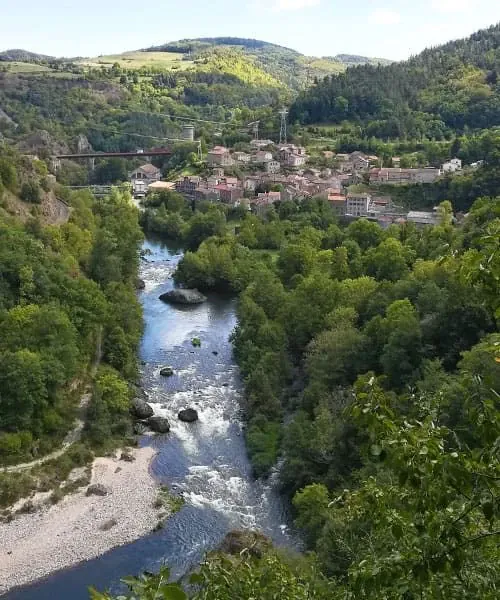
Return by vehicle to Montbonnet for the private-room option. The peat bog at Lac de l’Oeuf marks the start of the long descent into the Allier gorges, the natural boundary between Velay and Gévaudan. After the hamlet of Rochegude, known for its Saint-Jacques chapel, the Camino de Santiago trail drops down towards Monistrol d’Allier. Short transfer to St Didier d’Allier for the private-room option.
Distance14.5 km
InfoWalking time: 4 h
D+Ascent: 300 m
D-Descent: 690 m
Return by vehicle to Monistrol d’Allier for the private-room option. The climb via the Margeride plateau to Saugues is the only challenging part of this section of the Camino de Santiago. You enter granite country, with a change in the scenery and the architecture of the houses. Arrival in Saugues for a half-board stay. Discover its Tour des Anglais, a square keep dating from the 13th century, and its Gothic collegiate church of Saint-Médard.
Distance12 km
InfoWalking time: 3 to 4 h
D+Ascent: 550 m
D-Descent: 200 m
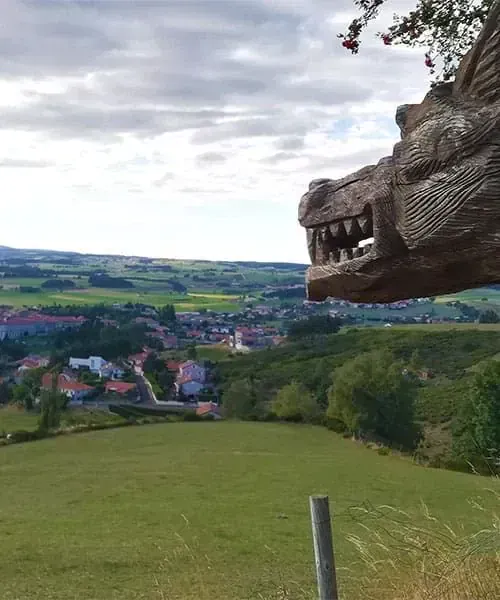
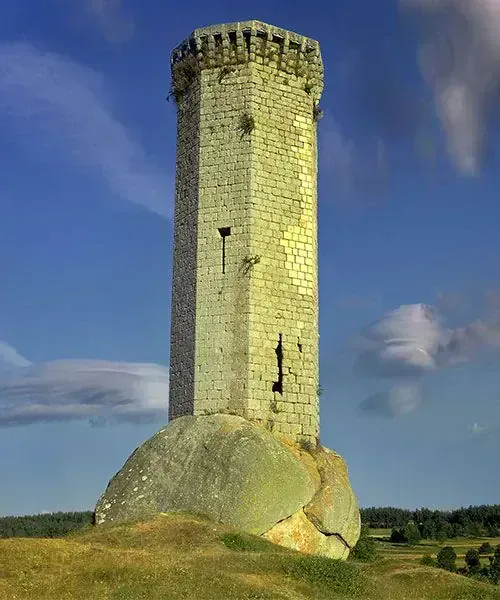
Cross the Margeride plateau, with its vast expanses of grassland dominated by moorland covered in broom, heather and bilberries, occasionally interspersed with a savannah of giant ferns. Discover the Tour de la Clauze, built in the 13th century and perched on a granite boulder.
Distance12 km
InfoWalking time: 3 h
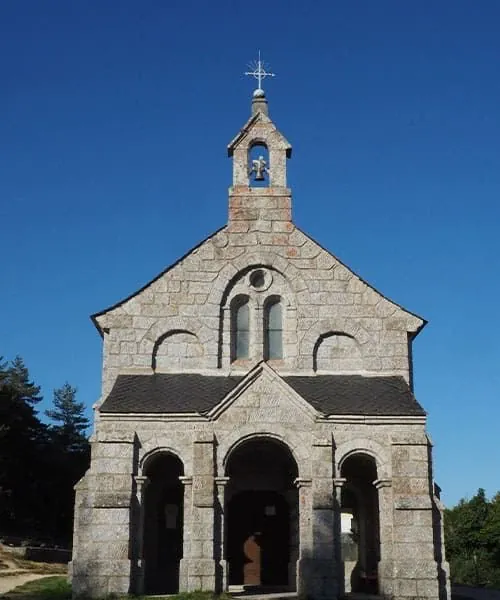
Discover the Saint-Roch chapel, also known as the Hospitalet-du-Sauvage chapel, built on a deserted mountain pass at an altitude of 1280m, beside a hospital for travellers. A half-board stay in Saint-Alban at a guesthouse or hotel, subject to availability. At the guesthouse, dinner and breakfast are delivered on site by the owners for you to serve yourself.
Distance16 to 19 km
InfoWalking time: 4 to 5 h
The long-distance walking trail (GR65) descends into the Truyère valley, climbs back up onto the vast Margeride plain and then reaches Aumont-Aubrac. Along the way, discover the Romanesque church at Les Estrets, a former Benedictine priory altered at various times, topped by a bell wall with three openings supporting a small bell turret.
The itinerary and included services end in Aumont-Aubrac in the late afternoon.
Distance17 to 20 km
InfoWalking time: 5 to 6 h
We may need to modify the itinerary described for logistical reasons (accommodation capacity issues, changes in ground conditions, landslides, damaged trails, etc.). These changes are always made in your interests, for your safety and greater comfort!
If accommodation is unavailable at a stop on the itinerary described above, we will offer you two consecutive nights at the previous or next stop and arrange the necessary transfers (a supplement may apply). Your walking itinerary remains unchanged.
To ensure you can follow the planned itinerary, we recommend booking as early as possible.
Dates, prices and booking
Accommodation
Luggage
Participants
Price per person
Book Details
From early April to mid-October
| Price per person | Hotel / guesthouse option | Dormitory option | ||
|---|---|---|---|---|
| With luggage transfers | Without luggage transfers | With luggage transfers | Without luggage transfers | |
| From 01/04/26 to 10/10/26 | 720 € | 630 € | 590 € | 500 € |
| From 01/04/27 to 10/10/27 | 760 € | 665 € | 620 € | 530 € |
Supplements may apply to luggage transfers in October
Prices include
- half-board accommodation, excluding dinner on day 1, in a room or dormitory depending on the option selected
- the travel information pack (1 travel information pack per booking)
- luggage transfers (depending on the option selected)
- transfers on days 2, 3 and 4 (room accommodation option only)
- tourist taxes
Prices do not include
- personal drinks
- lunches
- dinner in Le Puy-en-Velay
- bed linen and towels for the walkers' hostel option
- admission to attractions
- any parking fees for your vehicle in Le Puy-en-Velay
- insurance
- booking fees
- anything not listed under “Prices include”
Options & supplements
- single room supplement: 275 €
- extra night in Aumont-Aubrac with half board: 70 € in a dormitory or shared room / 95 € in a room for 2 / 150 € in a single room
- additional travel information pack: 35 €
- return minibus transfer from Aumont-Aubrac to Le Puy
- at 10:30: 36 € / person
- at 15:30: 31 € / person
Your advisor
Estelle Torterotot
Travel expert in France and Switzerland
Write
Technical and practical information
Easy to moderate. 3 to 6 hours of walking per day, with no technical difficulties. Low to moderate elevation changes, with 1 day involving +550m and 1 day involving -690m.
Easy to moderate paths and trails; the entire route is waymarked with GR markings (white and red) and/or scallop shell symbols.
No luggage to carry: you carry only what you need for the day in a small backpack. Your luggage will be waiting for you each evening at the end of the day’s walk. Your luggage is transported by vehicle and is limited to one bag per person weighing no more than 10 kg. Avoid suitcases and choose soft-sided bags.
If you choose the option without luggage transfers, you carry everything you need for the trip yourself.
From 2 people.
7 days, 6 nights, 6 days of walking.
Choose your own departure date from April to October.
We will send you a travel pack containing all the documents you need for your walking holiday: a route guide and maps, luggage labels, and an itinerary with contact details for your accommodation.
1 travel pack per booking. Additional travel packs are available for an extra charge (35 € / additional pack)
Accommodation
Choose from two options:
- in walkers' hostels: you will sleep in dormitories or, at best, in rooms with 4 to 8 beds; in both cases, you will share with other guests. Blankets are provided, but sheets and towels are not (these can usually be hired on site — not included, payable locally). Shared bathroom facilities (showers, washbasins and toilets) are outside the rooms. To encourage a friendly atmosphere, meals are served at set times and eaten together.
- in private rooms in hotels of various categories, guesthouses or pilgrim accommodation (such as inns or walkers' hostels), depending on availability (usually with a shower or bath and toilet in the room).
For practical reasons, including cleaning, collecting supplies and allowing the owners time to rest, check-in at walkers' hostels and guesthouses is not possible before 16:00/16:30.
Hotel ratings
In France, more and more hotels and guesthouses are choosing to remain unclassified, including establishments that still held an official rating one or two years ago. This does not mean their quality has declined — far from it. Many guesthouses offer charming rooms.
If we indicate, for example, a comfort level of “3* or equivalent”, this means that the establishment may not have an official rating, but offers a level of comfort comparable to a 3* hotel.
Meals
Half board, except in Le Puy-en-Velay, where accommodation includes breakfast only (there are plenty of pleasant little restaurants).
Dinners: served from 19:00/19:30; most often, these consist of the day’s pilgrim menu (starter, main course and dessert). During your walking holiday, you will discover regional specialities.
Breakfasts: served from 07:30, either at the table or as a buffet. They usually include a hot drink, bread and/or pastries, butter and jam, and sometimes fruit juice, yoghurt and sweetened cereals.
Picnic lunches: most accommodation providers offer packed lunches (not included, payable locally). The route guide in your travel pack provides information about places to buy supplies in shops at your overnight stops and/or along the route.
Please let us know about any food allergies or special dietary requirements when booking; we will do our best to adapt your meals.
Precautions / hygiene:
All our accommodation has been selected for its hospitality, comfort and cleanliness. Despite this, some accommodation providers have reported the return of bedbugs, which are most often carried by hikers. To help accommodation providers eradicate this problem and reduce the risk of bites, you should spray the inside and outside of your luggage (your daypack and your transferred luggage), as well as all your clothing and footwear. Sprays are available from pharmacies and some accommodation providers; some products are 100% natural and ECOCERT-certified. To reduce the risk of spreading bedbugs, we ask you to follow the accommodation providers' instructions carefully and understand that these measures are necessary (for example, a ban on taking luggage and backpacks into bedrooms or dormitories). Once you return home, if you have any concerns, we recommend washing all your belongings at 65°C or placing them in a freezer for 2 days (bedbugs cannot survive temperatures below 0°C).
Start
On Day 1 in the late afternoon at your accommodation in Le Puy-en-Velay
Finish
On Day 7 in the late afternoon in Aumont-Aubrac
By train
Direct access to Le Puy-en-Velay’s TER Auvergne-Rhône-Alpes railway station.
By car
Plan your route on www.viamichelin.fr. From Paris, via the A71, in 5 hours 40 minutes. From Lyon, via the N88, in 2 hours. From Marseille, via the A7 and N102, in 4 hours 20 minutes
Parking your car
You can park your vehicle in the Breuil underground car park (open Monday to Saturday from 07:00 to 22:00, closed on Sundays and public holidays). The town of Le Puy-en-Velay offers a particularly good-value “special hikers' rate” (2019): 7 days – approximately 25€, 14 days – approximately 45€, 1 months. Information and reservations: Breuil underground car park, Tel.: 0471020354. Reception open Monday to Saturday (except public holidays) from 07:30 to 20:00.
Returning to your car
Vehicle relocation: La Malle Postale offers a service to move your vehicle from your starting point to the end of your route. For more information (terms and current rates), contact La Malle Postale, Tel.: 0471042179 or 0667793816.
By train: Aumont-Aubrac SNCF railway station, Tel.: 0466428030
By minibus: Return transfer by minibus from Aumont-Aubrac to Le Puy-en-Velay, daily from April to October – departure from Aumont-Aubrac at 10:30 – arrival in Le Puy-en-Velay at around 12:15, or departure from Aumont-Aubrac at 15:30 – arrival in Le Puy-en-Velay at around 17:15 – fare 30€/person. Please take the distance of the final stage into account when choosing your return shuttle time if you are not booking an extra night at the end of your trip.
Book and pay for the transfer when booking your walking holiday.
A number of our trips offer opportunities to swim, either along the route or at the end of the day. It would be a shame to miss out. However, we stress that you alone must decide whether it is appropriate to swim; you therefore do so under your own responsibility and at your own risk.
Member of Agir pour un Tourisme Responsable (ATR)
Since 2012, Grand Angle has been a member of ATR, the leading association for more responsible tourism. We design our trips – walking, cycling and on snow – to encourage everyone to discover the world differently: with curiosity, respect and kindness.
With a seat on the board of directors since 2018, we actively help the tourism sector move towards more meaningful practices. In practical terms, we are committed to:
- Transparency in our practices and pricing
- Respect for our partners and local communities
- Protecting the environment on every trip
We also share the values of the Traveller’s Ethical Charter, which encourages everyone to take simple steps to protect the places they visit and make meaningful connections with others.
Travelife Partner
Since 2025, Grand Angle has held Travelife Partner status, an international label that certifies our responsible environmental, ethical and sustainable management practices, both within our company and in our work with partners and the organisation of our trips.
This label, the second level of a rigorous international certification scheme, recognises our concrete actions in support of responsible tourism. We are actively working towards the next level, Travelife Certified, in line with our sustainable development policy
In this section, you will find links to products from our partner Alpinstore, a French online retailer specialising in outdoor equipment, based in Annecy.
For carrying your belongings
- A comfortable 30 to 50 L backpack with a hip belt to carry your personal belongings and picnic lunch during the day
- A bag for luggage transfers: a backpack, a travel bag in good condition or a suitcase that is not too bulky. One bag per person, limited to 10 kg
Read our Mag to find out how to pack your hiking backpack properly.
For hiking
For maximum comfort, choose a layered clothing system: warm base layers (leggings + top) such as “Carline” or “Capilene” (hollow fibres that wick away perspiration) + a sweatshirt or fleece jacket + a mountain jacket and overtrousers with a waterproof, breathable membrane (such as Gore-Tex or equivalent) for bad weather. As a general rule, except in hot climates and countries, avoid cotton, which holds moisture close to the body (and takes a long time to dry), and choose suitable synthetic fabrics instead.
- Hiking boots with ankle support, a well-treaded sole, a heel counter and good waterproofing
- Comfortable hiking socks (at least 3 pairs)
- A fleece
- Comfortable walking trousers (quick-drying technical fabric)
- Comfortable technical shorts
- Technical T-shirts or base layers (quick-drying fabric)
- A long-sleeved shirt
- Walking poles (telescopic), very important for making walking easier. Discover all the benefits of hiking poles in our dedicated article or how to choose your hiking poles
Note: synthetic technical clothing performs very well. New merino wool clothing is also available; it performs very well, is comfortable to wear and has the advantage of resisting perspiration odours!
For your lunchtime picnic
- Your “kitchen” kit: a plastic bowl, container or plate, and cutlery (spoon, fork, knife)
- 1 or 2 water bottles (a total capacity of at least 1,5 L) – essential –; an insulated flask for winter
For protection from the sun and rain
- Sunscreen (high protection)
- Sunglasses
- A hat, cap or bucket hat
- A rain poncho or a waterproof jacket such as a softshell or Gore-Tex jacket, and possibly waterproof trousers
After your walk
- A pair of running-style trainers for the evening
- A change of clothes and underwear
- A toiletry bag and a small towel
- Swimwear and a towel for wellness facilities (where specified) or swimming
- A small first-aid kit: personal medication, surgical masks, hand sanitiser, plasters, sterile dressings and a bandage, gauze, disinfectant, arnica pellets and aspirin, etc. (Please note that this list is not exhaustive and should be adapted to your own medical needs.)
You can find this advice in our article #"what to take on a hike".
This list is intended as a guide and should be adapted to your trip and the season in which you are travelling.
France
Travellers, including minors, must carry a national identity card or passport (EU nationals).
Le Puy-en-Velay Tourist Office
2, place du Clauzel
43000 LE PUY-EN-VELAY
04.71.09.38.41 / 04.71.05.22.62
France: +33.
There may be no mobile reception on some sections of your hike.
No time difference: GMT +1.
With its undulating terrain and high elevation, Haute-Loire also owes its climate to its geographical position. It can be described as a mid-mountain climate, but it is complex and highly varied. Oceanic and continental influences take turns shaping this same landscape, alongside mountain and Mediterranean influences, creating a very broad range of climatic conditions, from the sweltering heat of the Brivadois plains to the icy blizzards (known as “la burle”) that bring the plateaux to a standstill. Far from being a drawback, this diversity has an undeniable appeal that can become a major asset.
From photography books and historical essays to travel accounts and novels, the route has inspired many authors.
General works:
- The Routes to Santiago de Compostela – Bernard BRIAIS, Editions de Borée (October 2013), 240 pages. Through photographs, this beautiful book invites us to discover or rediscover the beautiful places, historic monuments and natural sites along the four historic routes of the Way of St James.
- A Thousand Years Towards Compostela: The Adventure of Pilgrims on the Ways of St James – Patrick HUCHET, Editions Ouest France - Album Collection (October 2012), 204 pages. This book traces the entire history of the pilgrimage to Compostela, from its beginnings in the 9th century to its revival in the 20th century.
- The Pilgrimage – Paulo COELHO, Editions 84 - J’ai Lu Collection (April 2009), 256 pages. In this novel, the author, who undertook the pilgrimage to Santiago de Compostela himself, recounts his journey of initiation in a simple, flowing style, presenting it as a universal experience.
Works more specifically about the Le Puy route
- The Routes to Santiago de Compostela – Frantisek ZVARDON, Editions Signe - EnVol Collection (March 2013), 432 pages. This book contains magnificent photographs of the routes starting in Le Puy-en-Velay and Vézelay, and then of the Camino Francés. Over more than 5000km, we discover landscapes of breathtaking beauty that will inspire readers to go there or allow them to relive the experience.
- Express Pilgrim: Running the Routes to Compostela: 1950km in 40 Days, GR 65 and Camino Francés - Sylvain BAZIN, Editions Outdoor (July 2013). This travel account tells the story of journalist Sylvain Bazin’s journey along the Via Podiensis (the Le Puy route) and the Camino Francés.
- The pilgrim’s passport, or “credencial” or “créanciale”, and “La Compostela”: The “credencial” or “créanciale”, well known to pilgrims, allows you to keep a written record of your journey. This passport is a powerful symbol of belonging to the community of walkers on the Way of St James. It should be stamped at each stage at accommodation, certain churches, tourist offices… and confirms your status as a pilgrim. It is issued by your local Way of St James association or through your diocese’s pilgrimage service, but you can also obtain it in the main stopping places along the route (information is available from tourist offices). These stamps, which document your itinerary, will allow you to obtain the pilgrim’s certificate, “La Compostela”, on arrival in Santiago de Compostela.
IGN map at a scale of 1/25000 (Blue Series): no. 2735 East (Le Puy), no. 2736 West (Monistrol), no. 2636 East (Saugues), no. 2637 East (St-Amans), no. 2637 West (St-Chely), no. 2537 East (Fournels), no. 2537 West (Nasbinals).
Reviews
4 · 1 review
This trip doesn't have reviews yet. Discover what travelers say about similar trips.
★ ★ ★ ★ ★ Comment sent by QUINTEAU Bernadette in SeptemberA very beautiful hike, with plenty of variety each day and minimal elevation gain.
It’s a good idea to start with a 15-km hike on the first day; exploring a section of the Camino de Santiago that same day gives you a taste of the atmosphere of Compostela. On the relatively quiet Aubrac loop, we were lucky to have ideal weather with panoramic views; the route passes through numerous hamlets and villages, though there are few shops along the way.
★ ★ ★ ★ ★ Comment sent by Marie-Noëlle in JuneA pleasant and stress-relieving stay
★ ★ ★ ★ ★ Comment sent by Patricia in JuneA very lovely hike at this time of year
★ ★ ★ ★ ★ Comment sent by Martine in JuneA calm and peaceful trip
Would you like to make this a private trip?
Travel with friends or family on dates that suit you. Tell our specialists what you have in mind.
We also recommend
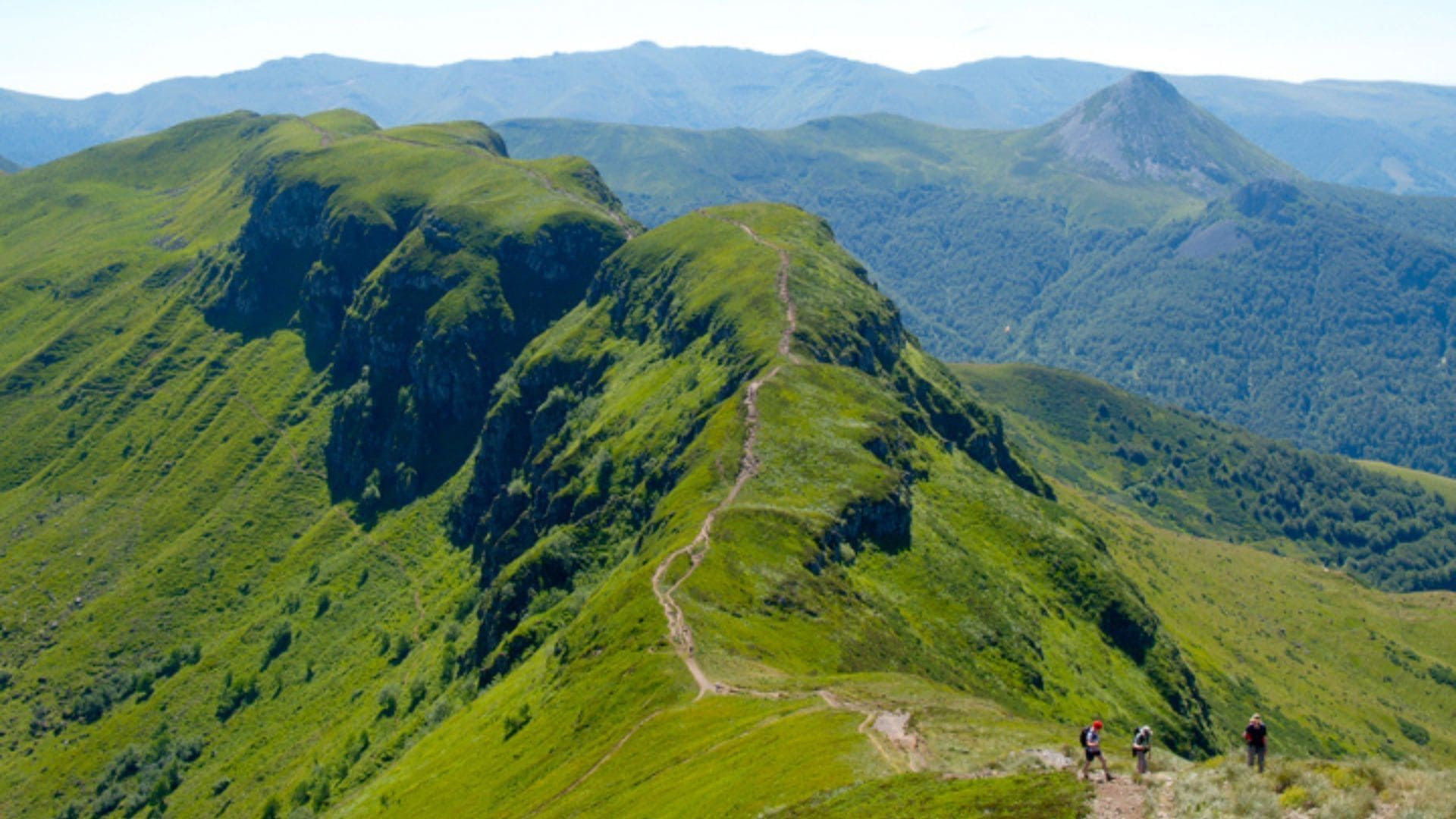
Lakes and volcanoes of Auvergne
Self-guided Hiking lodge to lodgeFrom €660
4,4 · 17 reviews
6 days●●ComfortNext departure from May 1, 2027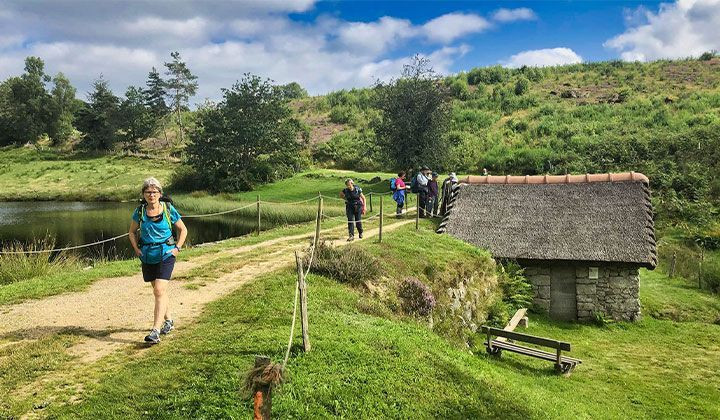
Plateau de Millevaches, Retrouvance®
Guided (fr) Hiking lodge to lodgeCurrently unavailable
6 days●●Friendly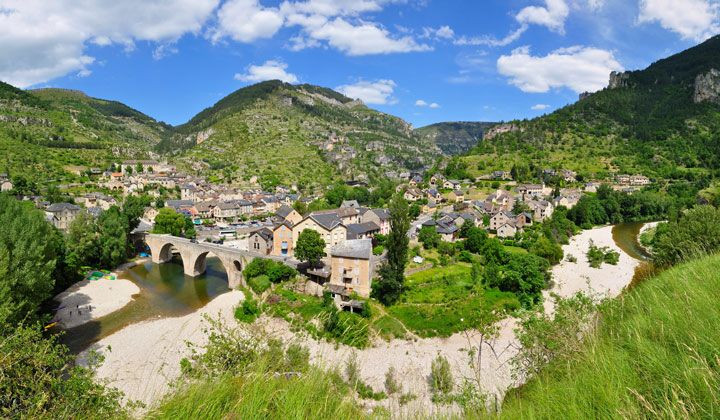
The Tarn and Jonte Gorges
Self-guided Hiking lodge to lodgeFrom €820
4,4 · 17 reviews
7 days●●FriendlyNext departure from Apr 20, 2027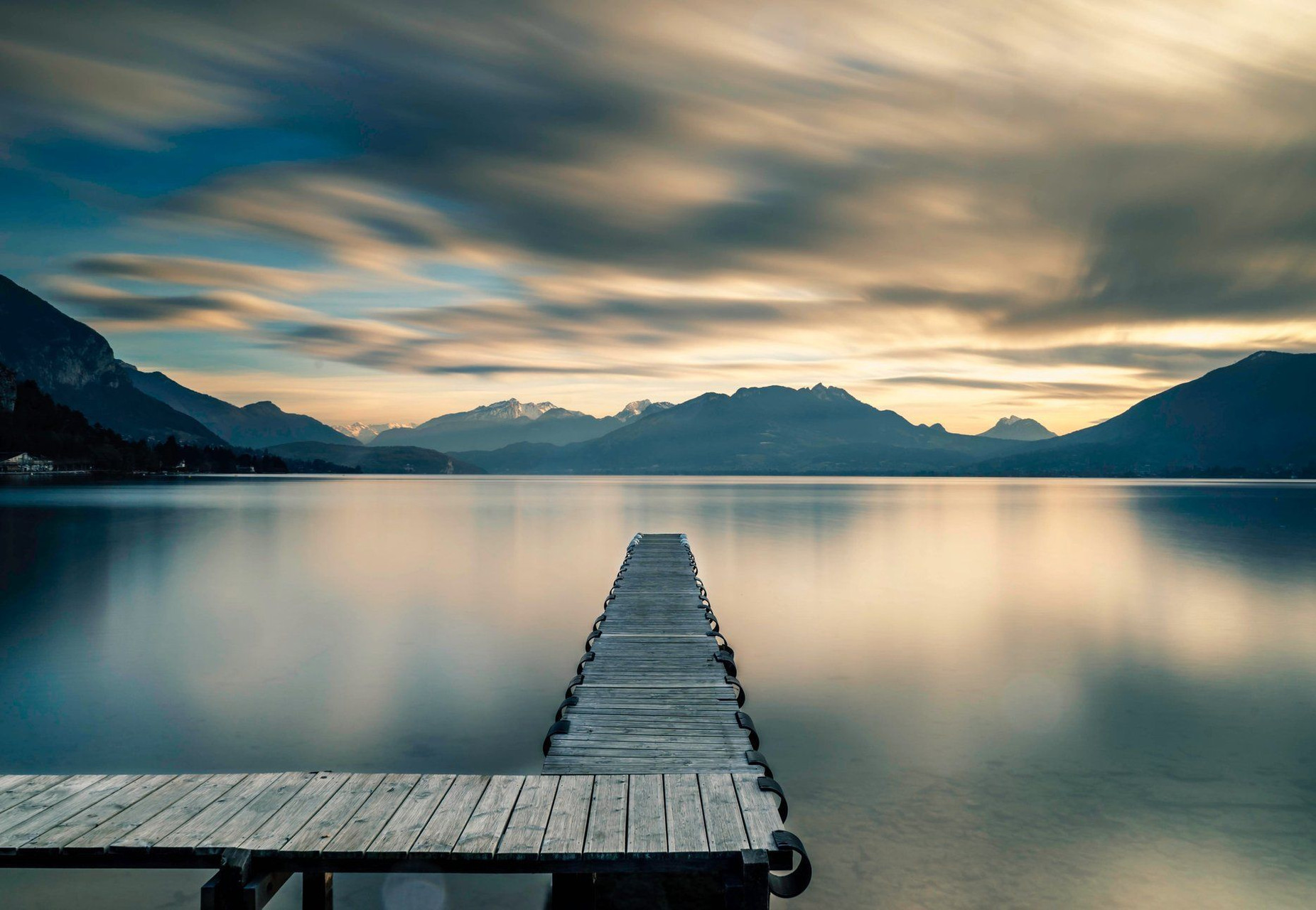
Chamonix to Lake Annecy
Self-guided Hiking multi-baseFrom €1,910
10 days●●●SuperiorNext departure from Jun 13, 2027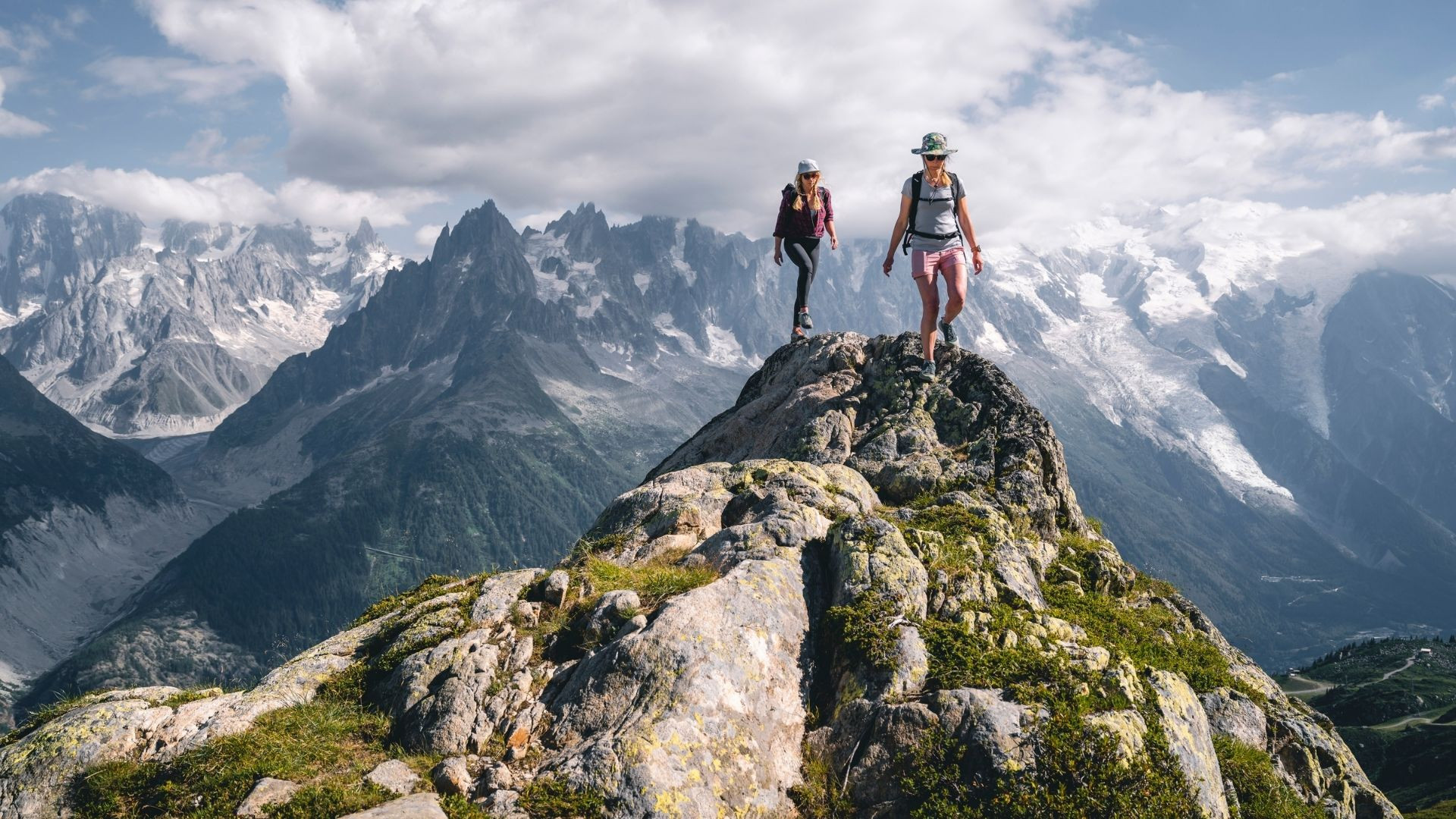
Tour du Mont Blanc 12-Days
Self-guided Hiking lodge to lodgeFrom €2,780
4,6 · 30 reviews
12 days●●●ComfortNext departure from Jun 15, 2027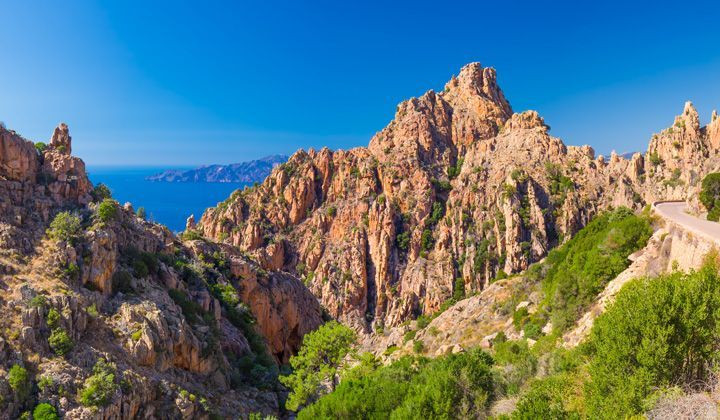
Corsica, sea and mountains from Piana to Calvi
Self-guided Hiking lodge to lodgeCurrently unavailable
6 days●●●Friendly


Continue exploring
 Trekking in Europe
42 trips
 Autumn hiking
10 trips
 Spring hiking
10 trips
 Europe
61 trips
 Self-guided tours
38 trips
- Autumn in Europe
20 trips
- Spring in Europe
19 trips
 Cycling in Europe
11 trips
 Cultural trips
11 trips
- Autumn cycling
10 trips
 32 European getaways for the whole family
9 trips
 France self-guided walking
11 trips
 Guided walking in France
10 trips
 Where to go trekking in France in May?
4 trips
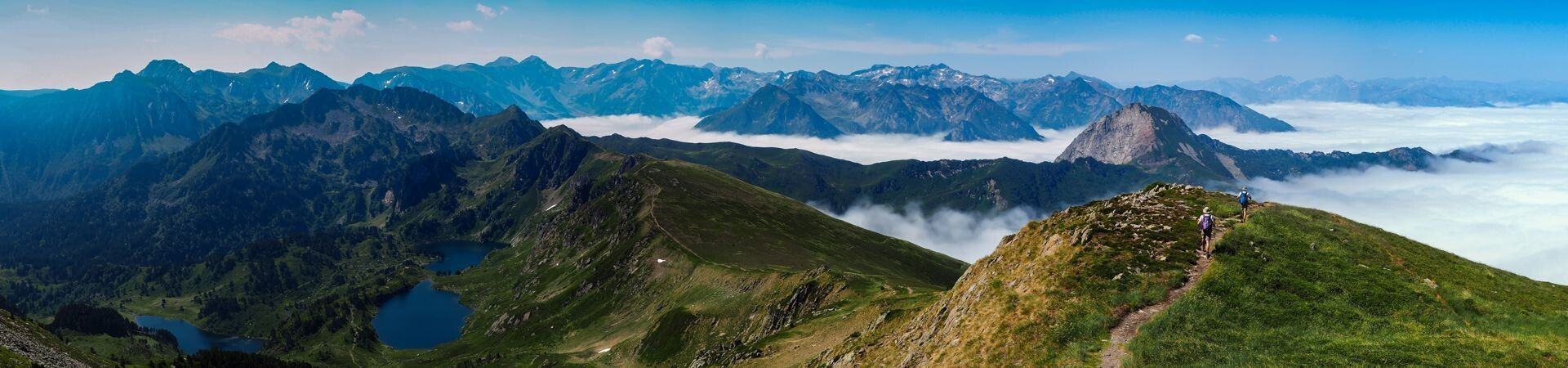 Mountain Hiking in France
3 trips
- Where to go trekking in France in April?
2 trips
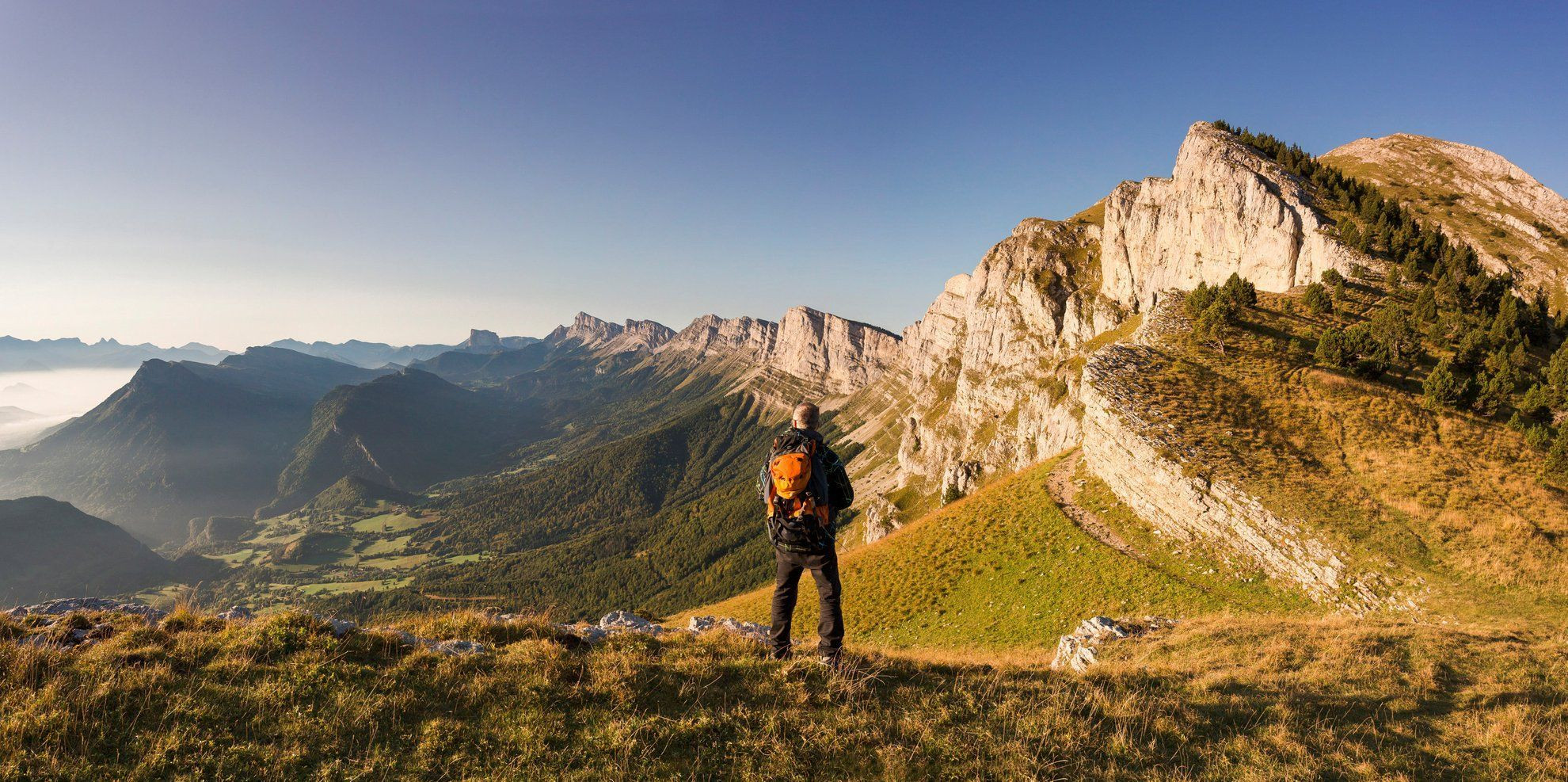 4-day trek in France
1 trip
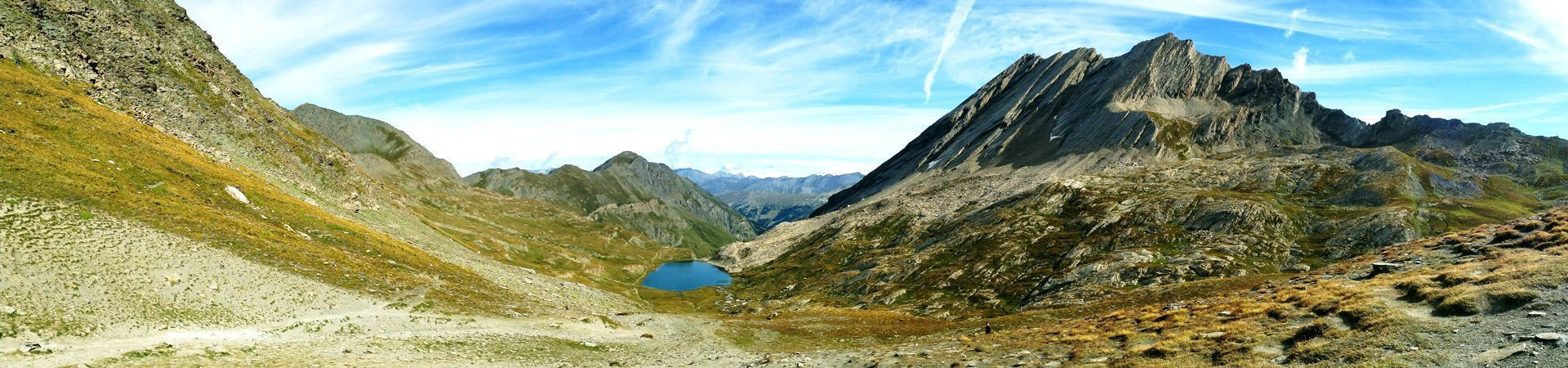 My First Trek in France
1 trip
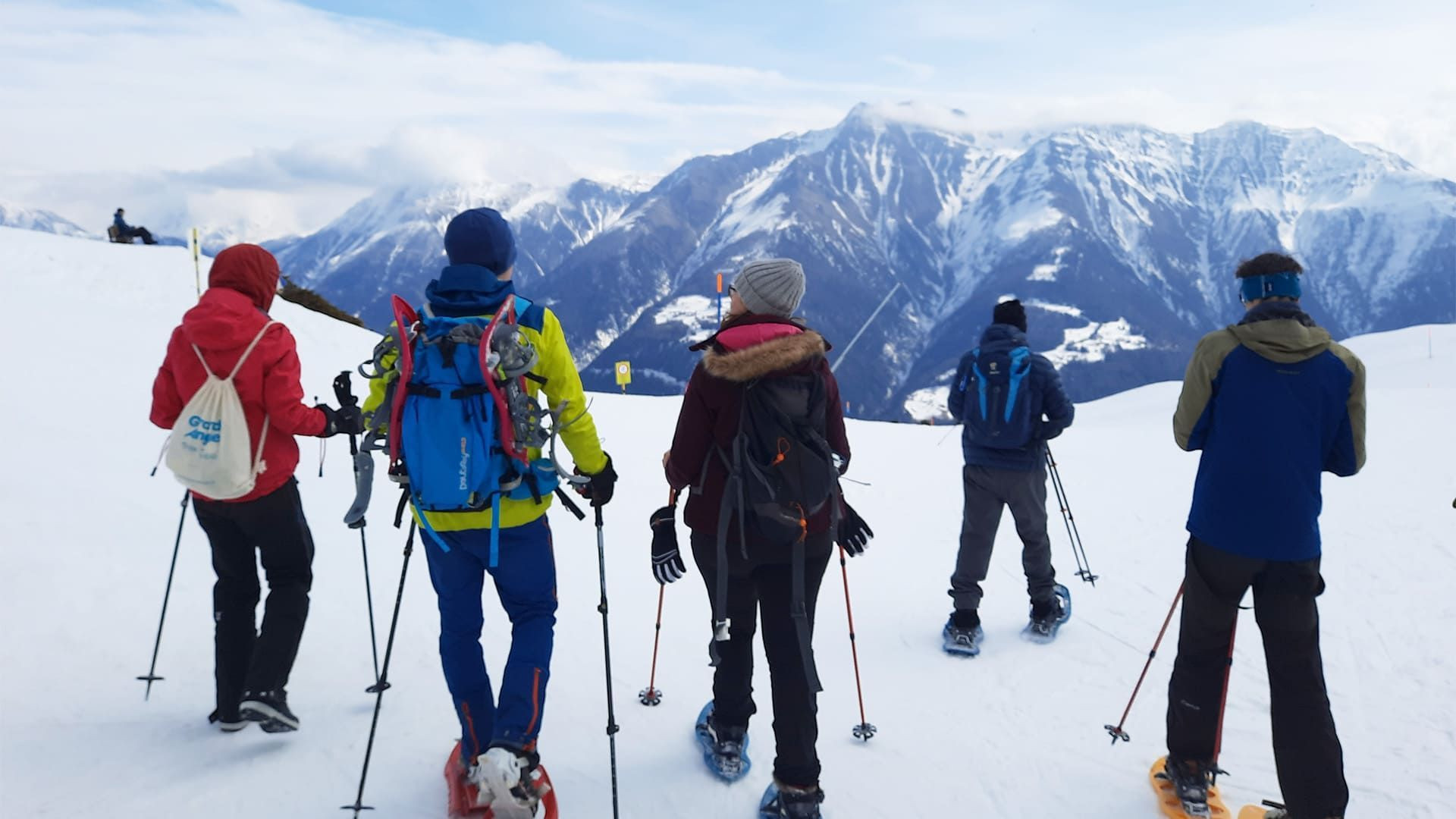 Winter trekking in France
1 trip
 France
28 trips
 Spring in France
8 trips
- Cycling in France
3 trips
 Snowshoes in France
3 trips
 Family cycling tours in France
1 trip
 Loire by bike
1 trip


